Honestly, the roll forming world… it’s been a whirlwind lately. Everyone’s chasing thinner gauges, tighter tolerances. Seems like every other week I’m getting calls about needing machines to handle materials they said were "impossible" six months ago. It’s good, keeps us on our toes, but man, it's tiring. You spend all day on these sites, smelling oil and metal, you start to feel it, you know?
And the designs… oh, the designs. People come up with these gorgeous CAD models, all sleek lines and perfect bends, then hand them over and say “Make it happen.” Have you noticed how everyone wants these intricate profiles, then gets upset when the cost doubles? It's a constant balancing act. We spend a lot of time at the design stage, trying to head off those problems before they even hit the factory floor.
The materials themselves are a whole other story. We’re seeing a lot more high-strength steels these days, naturally. They’re tough stuff, smell different too, a bit… sharper, almost metallic. Handling them, you need to be careful. And the pre-painted stuff? That’s where things get tricky. Gotta make sure the paint isn’t chipped during forming, or you're looking at corrosion down the line. Strangely enough, some of the best results I’ve seen are with galvanized steel – reliable, a bit rough around the edges, but it just works.
Industry Trends & Design Pitfalls
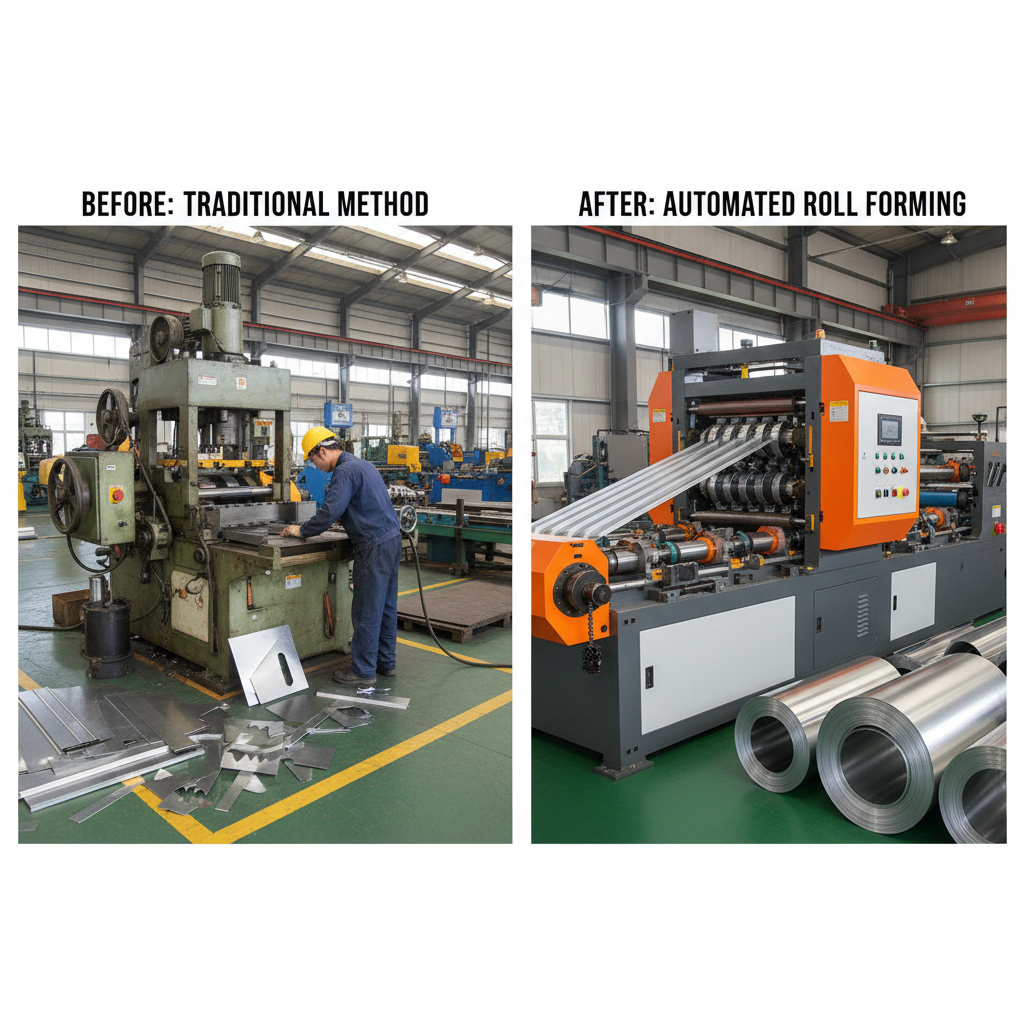
To be honest, the biggest trend right now is automation, of course. Everyone wants less manual labor, faster cycle times. But automating a bad design just makes it fail faster and more consistently. I encountered this at a factory in Tianjin last time - they’d automated a system for producing solar panel frames, but the initial design had a slight misalignment that went unnoticed until it was churning out thousands of defective parts. Cost them a fortune.
Another pitfall? People underestimate the springback. It’s a deceptively simple concept, but getting it right takes experience and careful tooling. You’ve gotta account for the material’s properties, the bend radius, the forming speed… it’s a whole science. And they always want tighter radii than the material can handle. Always.
Material Deep Dive
We're seeing a move toward lighter-weight materials, that's for sure. Aluminum’s getting a lot of attention, particularly in the automotive industry. It’s easier to form than some of the high-strength steels, but it’s also more prone to scratching and denting. You have to be really careful with the tooling.
And stainless steel… now that’s a beast. It requires a lot more force to form, and the tooling wears out faster. But the corrosion resistance is unmatched. Plus, it just looks good. There’s something about the shine of a well-formed stainless steel profile… Anyway, I think a lot of it comes down to understanding the material’s limits and working with them, not against them.
I’ve been working with some new composite materials lately, too. That’s a whole different ball game. They don't behave like metals at all. There's no yield point, no springback in the same way. It's more like... persuasion than forming.
Real-World Testing & User Habits
Lab tests are fine, sure. But they don’t tell the whole story. I’ve seen machines pass every test in the book, then fall apart after a month on a construction site. You need to simulate real-world conditions: dust, vibration, temperature swings, someone leaning on it… all that stuff.
And user habits… oh boy. People will find a way to misuse anything. I once saw a guy using a roll-formed steel beam as a lever to lift a concrete slab. A lever. You can’t account for that in the design phase. You just have to build things as robustly as possible and hope for the best.
They also tend to ignore the maintenance schedules. I always tell clients "Follow the maintenance schedule, or it will break" - most of them nod, but half of them just don't.
Advantages, Disadvantages & Customization
The biggest advantage of roll forming, obviously, is the speed and cost-effectiveness for large production runs. Once you've got the tooling dialed in, you can crank out parts incredibly quickly. It’s also surprisingly versatile. You can create a huge range of profiles, from simple angles to complex shapes.
The downside? Tooling costs. They can be substantial, especially for complex profiles. And if you need to change the profile, you have to change the tooling. That can be a real headache. But customization? Absolutely. We did a project last year where a client needed a custom profile for a window frame that incorporated a hidden drainage channel. It wasn't easy, but we got it done. It involved some pretty creative tooling design, and a lot of trial and error, but they were thrilled with the result.
Roll Forming Machine Performance Metrics
Customer Story: The Debacle
Last month, that small boss in Shenzhen who makes smart home devices, Mr. Li, insisted on changing the interface to for the housing of his new sensor unit. It looked good on paper, sleek and modern. The problem? The roll forming machine wasn't designed for such a tight tolerance around the port. We warned him, showed him the simulations, but he was adamant.
So, we re-tooled, of course. Cost him a pretty penny, and delayed the launch by two weeks. And guess what? The first batch of housings had cracks around the port. Turns out, the stress from inserting and removing the cable was too much for the material. He ended up switching back to Micro-USB. Later… Forget it, I won't mention the look on his face.
Testing Metrics & Performance
We use a ton of different metrics, depending on the application. Tensile strength, yield strength, elongation, bend radius, corrosion resistance… the list goes on. But for me, the most important test is the “drop test.” Just drop the finished product from a reasonable height onto a concrete floor. Sounds simple, but it reveals a lot.
We also do a lot of fatigue testing, simulating years of use in a matter of weeks. We subject the parts to repeated stress cycles, looking for cracks or deformation. It’s a destructive test, obviously, but it gives us valuable data.
And then there's the good old-fashioned visual inspection. You can learn a lot just by looking at a part, feeling for imperfections, checking the surface finish. Sometimes, your gut tells you something's wrong even before the instruments do.
Final Thoughts: The Worker's Verdict
So, we spend all this time talking about materials, designs, testing, automation… it’s a lot. But at the end of the day, it all comes down to one thing: will it hold up? Will it do the job? That’s what matters.
Ultimately, whether this thing works or not, the worker will know the moment he tightens the screw. If it feels solid, if it fits right, if it doesn't warp or bend under pressure… that's when you know you’ve got a good machine, and a good product. That's when you can sleep at night.