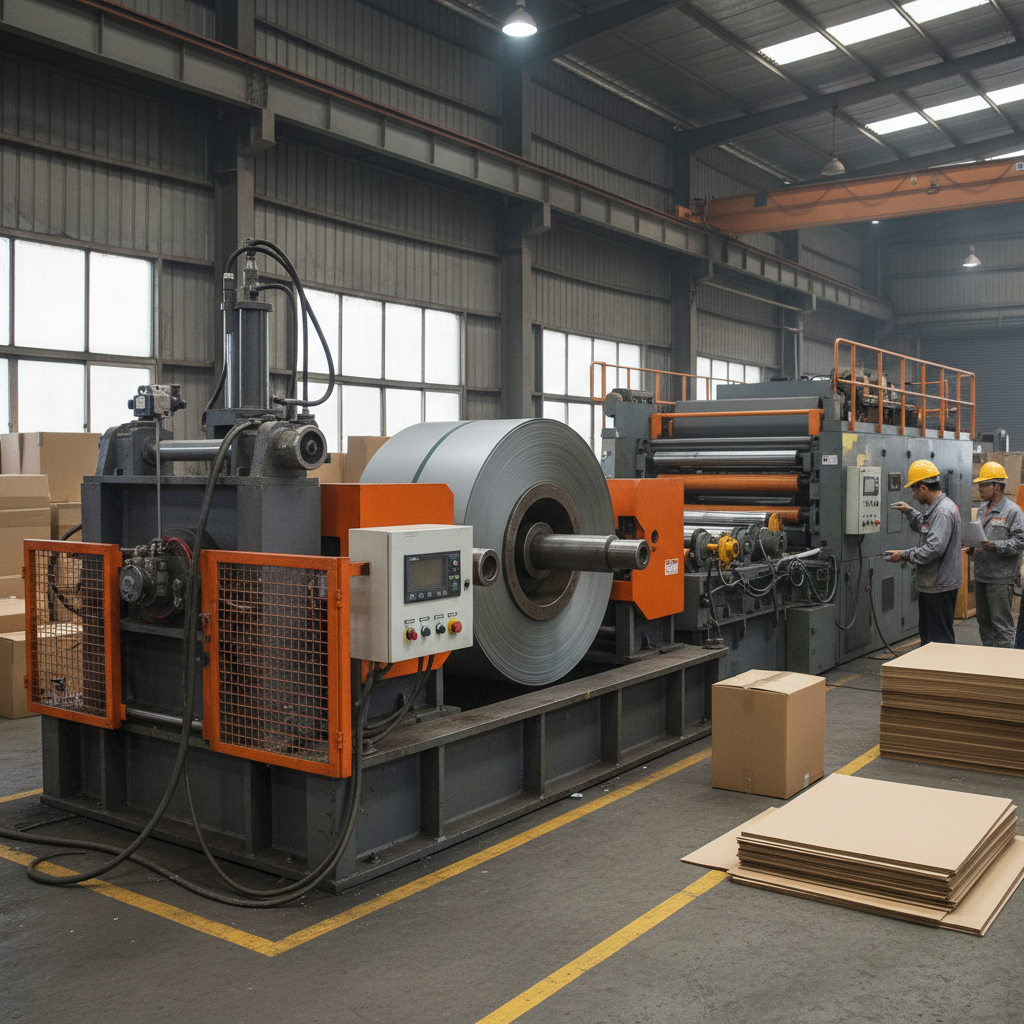
Honestly, these days everyone's talking about lightweight, high-strength. It's the buzzword, right? But you spend enough time on construction sites like I do, you realize lightweight often means…fiddly. And fiddly means slow, and slow means money walking out the door. We've been pushing the boundaries with steel grades, that's for sure. But haven't you noticed, the higher the grade, the more brittle it gets? It's a trade-off.
Designing these china roll former machines… It’s not just about CAD drawings and stress calculations. It’s about what happens when a guy with sweaty hands is trying to line everything up in 90-degree heat. I encountered this at a factory in Foshan last time; they had a beautiful design on paper, but the access panels were impossible to get to without a contortionist. Anyway, I think practical usability is often overlooked.
We primarily use Q235 and Q345 steel for the main frame. Good stuff. You can smell the oil on it when it arrives, a kind of metallic tang. Not like the fancy imported alloys… they always feel sterile. The rollers themselves? That’s where things get interesting. We’ve experimented with different chrome alloys, and lately, we’ve been looking at vanadium for increased wear resistance. It's a bit of a pain to weld with, though.
The Current Trends in Roll Forming
Strangely enough, everyone's going for automation. Not just robotic arms, but integrated systems. Cameras checking for defects, sensors adjusting the roll pressure on the fly… It's a lot of extra expense upfront, but labor costs keep climbing. And frankly, the quality control is better. A human eye misses things. We've seen a real push for thinner gauge materials too, which puts more stress on the rollers and the whole machine’s precision.
Sustainability is another big one, unsurprisingly. People are asking about recycled steel, energy-efficient motors. Honestly, the recycled steel is good, but it's often… inconsistent. You have to be really careful with your sourcing.
Common Design Pitfalls
Biggest mistake I see? Trying to overcomplicate things. Engineers love to add features, but a simple, robust design is always better. Access for maintenance is huge. If you can't easily get in there to change the rollers or adjust the alignment, you've got a problem. Also, neglecting the base. A wobbly base throws everything off. You'd be surprised how many machines we've seen where the base wasn't adequately reinforced.
Another thing… cooling. Roll forming generates a lot of heat. If you don’t have proper cooling, the steel expands, the alignment drifts, and you’re chasing your tail all day. I saw a guy last year almost burn his hand on a roller that wasn’t cooled properly.
And don't even get me started on the electrical systems. Cheap wiring, inadequate grounding… It's a recipe for disaster. We always insist on high-quality electrical components, even if it adds to the cost. It’s not worth the risk.
Materials Used in China Roll Formers
Like I mentioned, Q235 and Q345 are our workhorses for the frame. They’re readily available, relatively inexpensive, and weld beautifully. For the rollers, we’re constantly evaluating different alloys. Chrome alloys are standard, obviously, for wear resistance. But we’ve been experimenting with vanadium, molybdenum, and even a bit of tungsten for specific applications. Those higher alloys are more expensive, and more difficult to work with, but the increase in lifespan can be significant.
The cutting tools… now that’s a topic. We've moved away from simple hardened steel blades to carbide inserts. They hold an edge longer, and they're easier to replace. It makes a huge difference in the quality of the cut, and reduces downtime. And the lubricating oil? Don’t skimp on the oil! A good quality oil reduces friction, extends the life of the rollers, and improves the surface finish of the formed metal. You can tell a good oil by the smell – a kind of clean, almost floral scent. Cheap oil smells… greasy.
We also use a lot of cast iron for the base. It’s heavy, which is good for stability, and it dampens vibrations. But it’s also brittle, so you have to be careful with it. We reinforce the cast iron with steel ribs to prevent cracking.
Testing and Quality Control
Lab tests are fine, I guess, but I trust the real world. We take every machine, after assembly, and run it at full capacity for at least 8 hours straight. That’s when you find the weak points. We run different gauges of steel through it, different profiles, and push it to the limit.
We also have a dedicated team that focuses on dimensional accuracy. They use laser scanners and coordinate measuring machines (CMMs) to verify that the finished product meets our specifications. We’ve had some issues with misalignment in the past, so we've invested heavily in precision alignment tools.
Roll Former Quality Control Metrics
Real-World Application and User Behavior
People use these machines for everything. Roofing, siding, structural components, even furniture frames. I’ve seen a guy use one to make custom gutters for his house! But you know what’s funny? They rarely use them exactly as we intended. They always find a way to modify something, to push the limits.
I saw one customer in India using ours to create the framework for solar panel mounts. It wasn't the original intent, but it worked perfectly. Adaptability is key. And that's why we try to build in as much flexibility as possible.
Advantages and Disadvantages
The big advantage, obviously, is speed and efficiency. You can produce a lot of material, consistently, with minimal labor. And the quality is excellent, as long as the machine is properly maintained. But… they're complex. If something goes wrong, it can be a pain to diagnose. And they're not cheap. The initial investment is significant.
Another disadvantage is the limited flexibility. Once you set up the machine for a specific profile, it's not easy to change it. You need different rollers, which can be expensive and time-consuming to acquire. But, honestly, that’s a trade-off you make for the speed and efficiency.
Last month, that small boss in Shenzhen who makes smart home devices insisted on changing the interface to , and the result was…a week of wasted time rewiring everything. He wanted to be “modern,” but it wasn't practical. He learned his lesson.
Customization Options
We offer a lot of customization. Different roller profiles, different gauges of steel, different automation levels. But the most common request is for custom cutting systems. Some customers need precise cuts, others need miters, others need to be able to cut different angles. We can build a system to handle almost any requirement.
We also offer custom control systems. Some customers want to integrate our machines into their existing automation systems. We can provide the necessary interfaces and protocols to make that happen. The key is to understand the customer’s specific needs and to design a solution that meets those needs.
For example, we had a client in Australia who wanted to use our machine to produce roofing sheets with a unique pattern. We designed and manufactured a custom set of rollers to create that pattern. It took a lot of work, but the customer was thrilled.
Key Performance Indicators for China Roll Former Machine Operation
| Production Throughput (meters/hour) |
Material Waste Rate (%) |
Downtime for Maintenance (hours/week) |
Operator Skill Level (1-5) |
| 15-25 |
1-3 |
0.5-2 |
3 |
| 20-30 |
0.5-2 |
0.2-1 |
4 |
| 10-20 |
2-4 |
1-3 |
2 |
| 25-35 |
0.2-1 |
0.1-0.5 |
5 |
| 12-22 |
1.5-3.5 |
0.8-2.5 |
3 |
| 18-28 |
0.8-2.8 |
0.3-1.5 |
4 |
FAQS
Regular lubrication of the rollers and bearings is crucial. We recommend a high-quality, penetrating oil. Also, regularly inspect the rollers for wear and tear, and replace them as needed. Keep the machine clean, free of dust and debris. And don't forget to check the electrical connections! A loose connection can cause all sorts of problems.
Our standard machines can handle steel gauges from 0.5mm to 3mm. However, we can customize the machine to handle thicker or thinner gauges, depending on your specific needs. It's all about the roller design and the power of the motor. Be mindful though, going too thick or thin can affect the quality of the formed metal.
That depends on the complexity of the profile and the skill of the operator. A simple profile change can take as little as 30 minutes. A more complex change, involving multiple roller adjustments, could take several hours. That’s why we design our machines with quick-change roller systems to minimize downtime.
Most of our machines operate on 380V three-phase power. However, we can also offer machines that operate on other voltages, depending on your location. It’s important to ensure that you have the correct power supply before installing the machine. Improper voltage can damage the motor and other electrical components.
Yes, absolutely. We offer comprehensive training programs for your operators. Our training covers machine operation, maintenance, troubleshooting, and safety procedures. We can provide training at our facility or at your site, depending on your preference. A well-trained operator is key to maximizing the machine’s efficiency and longevity.
The lead time for a custom machine varies depending on the complexity of the design and our current workload. Typically, it takes 8-12 weeks from the date of order to delivery. We’ll provide you with a detailed timeline once we have a clear understanding of your requirements. We try to be as transparent as possible about the process.
Conclusion
So, these china roll former machines… they’re not magic. They're complex pieces of engineering, sure, but at the end of the day, they're just tools. And the quality of the tool is only as good as the person using it. We focus on building robust, reliable machines that can withstand the rigors of a real-world construction site.
Ultimately, whether this thing works or not, the worker will know the moment he tightens the screw. If it feels solid, if it lines up right, if the metal flows smoothly… that’s when you know you’ve got a good machine. And that’s what we strive for. If you're interested in learning more, or if you have a specific project in mind, visit our website: www.yowinmachine.com.