
Beam Roll Forming Machine Suppliers—ISO, Custom, Fast?
Beam Roll Forming Machine Suppliers—ISO, Custom, Fast?
Tue . 10, 2025
If you’ve ever tried to shortlist beam roll forming machine suppliers, you know the drill: spec sheets look similar, lead times slip, and the real differentiators hide in the details. I’ve spent enough time on shop floors (and in too many noisy test runs) to say this—ask about tooling steel, shaft treatment, and after‑sales support before you ask about price. Price is the loudest metric, but rarely the most expensive mistake.
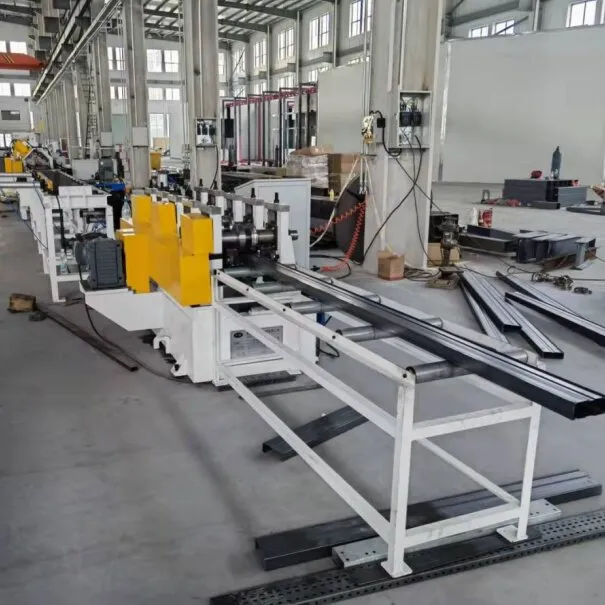 Industry trend check, quick and honest:
- Faster changeovers via split rollers and modular stands.
- Tougher beams (2.5–5.0 mm) at steady speeds—no chatter, minimal twist.
- More PLC transparency, remote diagnostics; surprisingly, even mid-size factories want machine data, not just parts.
Spotlight product: Automatic C Beam And Embrace Roll Forming Machine from Yowin (origin: Room 5019, Beichen Square, No.19 Shifang Road, Chang'an District, Shijiazhuang, China). It’s a practical workhorse—nothing flashy, but the metallurgy choices show they’ve built machines for real production, not just expos.
Industry trend check, quick and honest:
- Faster changeovers via split rollers and modular stands.
- Tougher beams (2.5–5.0 mm) at steady speeds—no chatter, minimal twist.
- More PLC transparency, remote diagnostics; surprisingly, even mid-size factories want machine data, not just parts.
Spotlight product: Automatic C Beam And Embrace Roll Forming Machine from Yowin (origin: Room 5019, Beichen Square, No.19 Shifang Road, Chang'an District, Shijiazhuang, China). It’s a practical workhorse—nothing flashy, but the metallurgy choices show they’ve built machines for real production, not just expos.
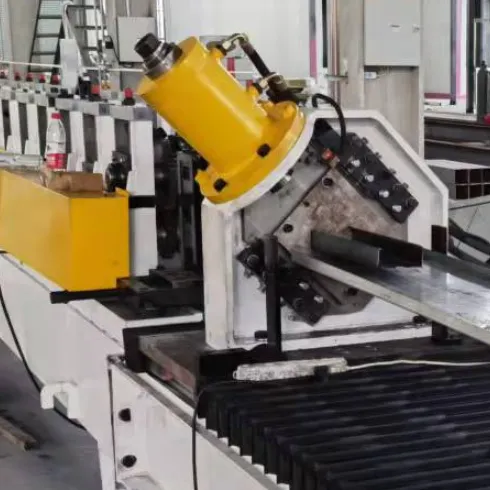 Product specifications (field-proven, real-world use may vary):
How the process flows (the part many brochures skip):
- Decoiling and leveling: keep yield stress consistent; less springback later.
- Servo feed and punching (if needed).
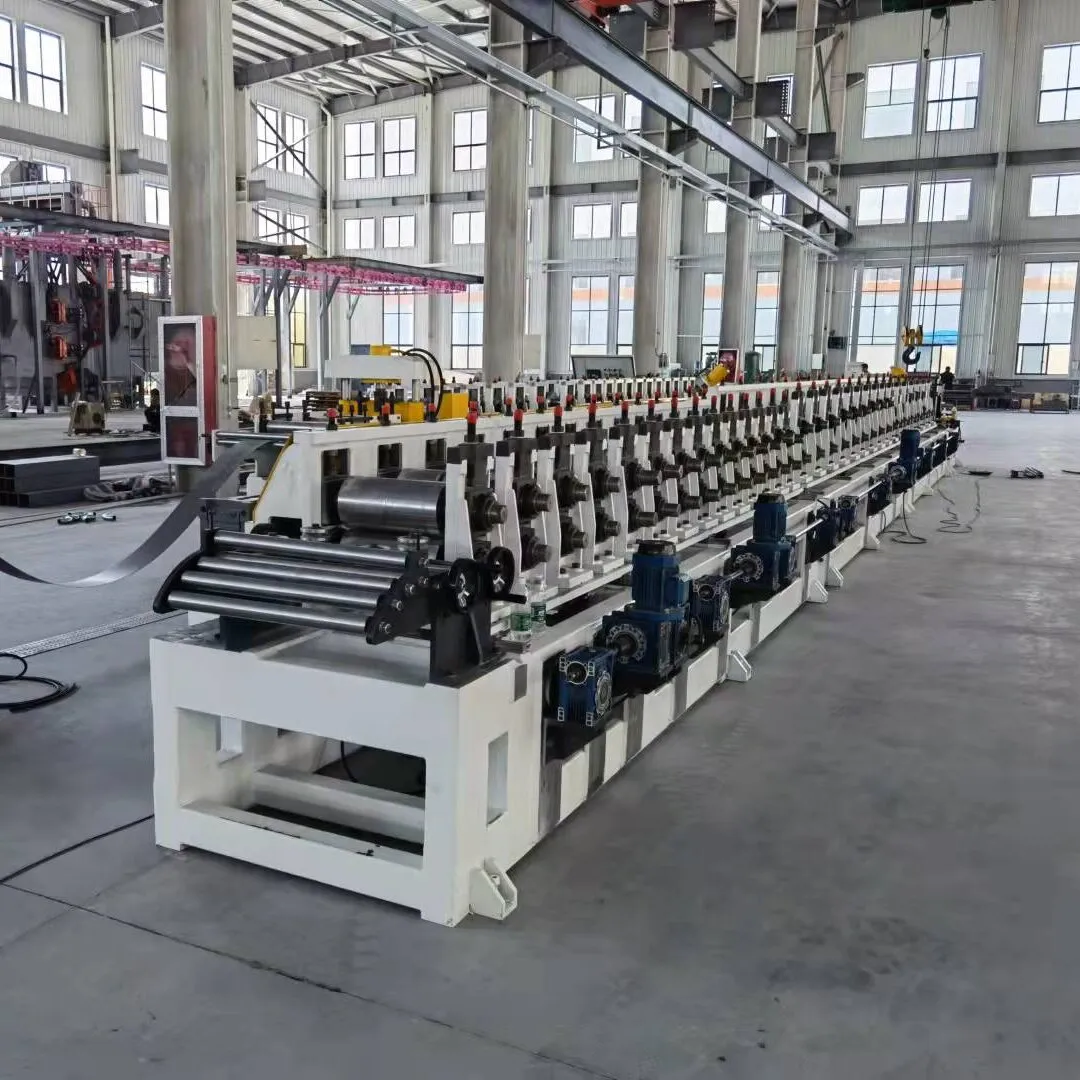
- Roll forming across ≈16 stands; chain transmission balances cost and serviceability.
- Quenched Cr12 rollers ride on 40Cr shafts—this combo matters for beam flatness.
- Flying cut or hydraulic cutoff; stacking.
Typical tolerances we’ve seen: width ±0.5 mm on 6 m beams; camber
Usage scenarios
- Warehouse racking, mezzanines, solar mounting, light industrial frames.
- Plants running ≈3,000–8,000 m/day appreciate the low-complaint finish.
Service life: with normal maintenance, 8–12 years; rollers typically re-ground after 10–15k tons. Many customers say the machine is “boringly reliable”—which is exactly what you want.
Vendor comparison (shortlist lens, not a beauty contest):
 Customization checklist (what to ask for):
- Punching layouts and beam depths; coil width accommodation.
- PLC brand (Siemens/Mitsubishi), HMI language, recipe storage.
- Safety per EN 60204-1, interlocks, light curtains.
- Voltage options if you’re not on 380V/60Hz.
Case in point: a racking plant upgraded to this line and hit 3,200 m/day with scrap dropping from 1.2% to 0.6%. The kicker? Better coil verification and a calmer first stand—small tweaks, big money.
Customization checklist (what to ask for):
- Punching layouts and beam depths; coil width accommodation.
- PLC brand (Siemens/Mitsubishi), HMI language, recipe storage.
- Safety per EN 60204-1, interlocks, light curtains.
- Voltage options if you’re not on 380V/60Hz.
Case in point: a racking plant upgraded to this line and hit 3,200 m/day with scrap dropping from 1.2% to 0.6%. The kicker? Better coil verification and a calmer first stand—small tweaks, big money.
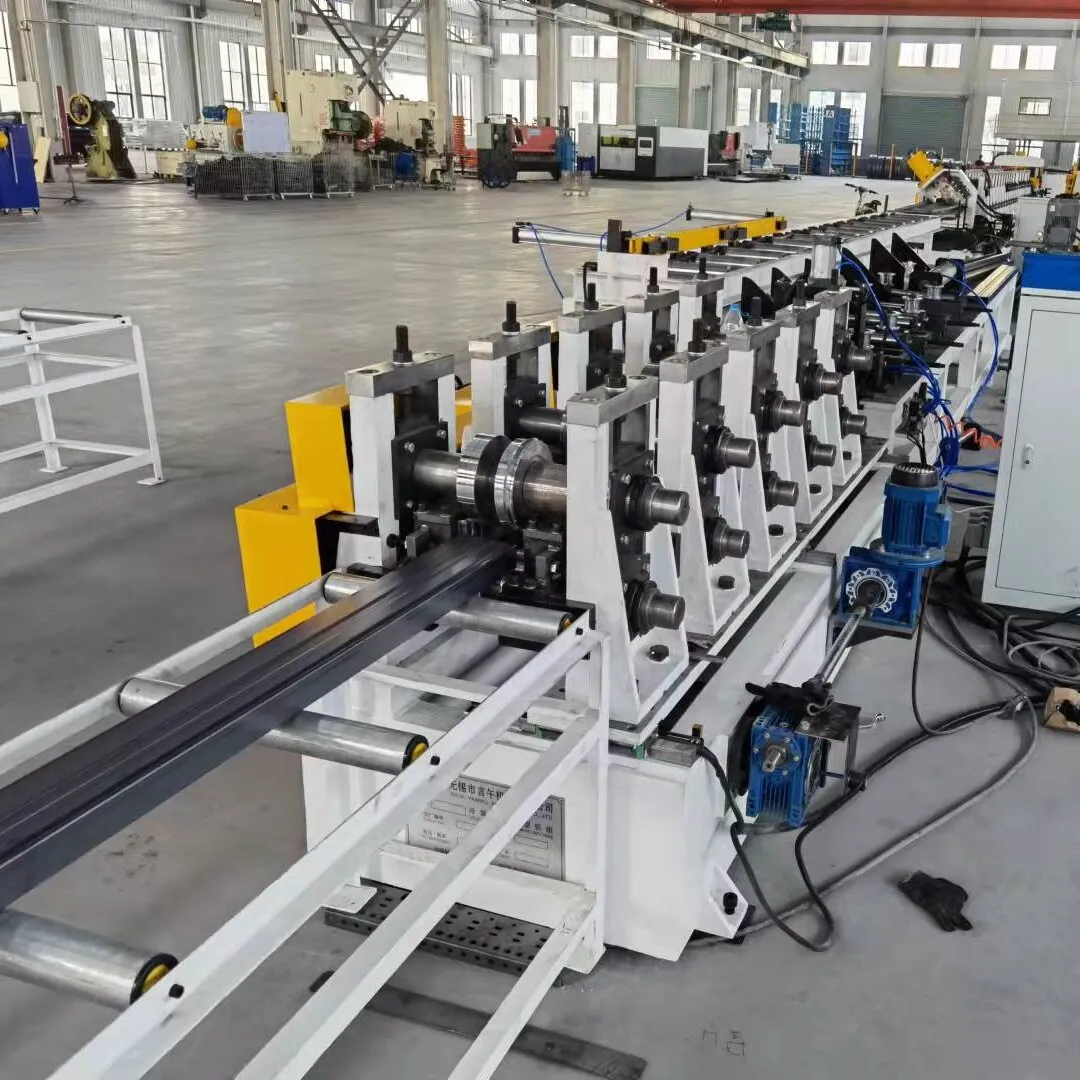 Final thought: shortlist three beam roll forming machine suppliers, audit their roller steel certificates, and request a witnessed FAT with dimensional logs. You’ll sleep better—and your QA team will thank you.
Industry trend check, quick and honest:
- Faster changeovers via split rollers and modular stands.
- Tougher beams (2.5–5.0 mm) at steady speeds—no chatter, minimal twist.
- More PLC transparency, remote diagnostics; surprisingly, even mid-size factories want machine data, not just parts.
Spotlight product: Automatic C Beam And Embrace Roll Forming Machine from Yowin (origin: Room 5019, Beichen Square, No.19 Shifang Road, Chang'an District, Shijiazhuang, China). It’s a practical workhorse—nothing flashy, but the metallurgy choices show they’ve built machines for real production, not just expos.
Product specifications (field-proven, real-world use may vary):
| Material thickness | ≈2.5–5.0 mm |
| Forming speed | 0–15 m/min |
| Main motor / Horizontal motor | 15 kW / 1 × 1.5 kW |
| Stands | ≈16 |
| Roller material / hardness | Cr12, quenched HRC 58–62 |
| Shaft diameter / material | Φ90–110 mm, 40Cr, Q&T HB 220–260 |
| Transmission | Archway chain, split roller pilot; main-axis inserted |
| Control / Voltage | PLC; 380V / 3Ph / 60Hz |
| Vendor | Lead time | Certifications | Speed range | Support | Customization | Price |
| Yowin Machine | ≈45–75 days | ISO 9001; CE (Machinery Directive) | 0–15 m/min | Remote PLC + on-site | High (tooling, PLC brand, voltage) | $$ |
| Global Brand A | 90–150 days | ISO/CE/UL options | 0–20 m/min | Global network | High | $$$ |
| Regional Integrator | 30–60 days | Varies | 0–12 m/min | Local only | Medium | $–$$ |
Customization checklist (what to ask for):
- Punching layouts and beam depths; coil width accommodation.
- PLC brand (Siemens/Mitsubishi), HMI language, recipe storage.
- Safety per EN 60204-1, interlocks, light curtains.
- Voltage options if you’re not on 380V/60Hz.
Case in point: a racking plant upgraded to this line and hit 3,200 m/day with scrap dropping from 1.2% to 0.6%. The kicker? Better coil verification and a calmer first stand—small tweaks, big money.
Final thought: shortlist three beam roll forming machine suppliers, audit their roller steel certificates, and request a witnessed FAT with dimensional logs. You’ll sleep better—and your QA team will thank you.
- ISO 9001:2015 Quality management systems.
- ISO 12100:2010 Safety of machinery — Risk assessment and risk reduction.
- EN 60204-1:2018 Safety of machinery — Electrical equipment of machines.
- ASTM A370-22: Standard Test Methods and Definitions for Mechanical Testing of Steel Products.
- ISO 6892-1:2019 Metallic materials — Tensile testing — Part 1.
Share