
Custom Wall Panel Roll Forming Machine | Efficient & Precise
The Evolution and Impact of wall panel roll forming machine Technology
In the rapidly evolving landscape of construction and industrial fabrication, the efficiency and precision of manufacturing equipment are paramount. The wall panel roll forming machine stands as a cornerstone technology, enabling the high-volume production of metal wall panels critical for a myriad of applications. These machines transform flat metal coils into custom-profiled panels, offering superior structural integrity, aesthetic appeal, and rapid installation for modern buildings. This detailed overview explores the technical intricacies, market dynamics, and operational advantages that define the leading edge in roll forming technology.
Current Industry Trends and Market Drivers
The demand for advanced roll forming solutions is driven by several key industry trends. Sustainability initiatives are pushing for lighter, more durable, and energy-efficient building materials, positioning metal wall panels as an ideal choice. Automation and smart manufacturing principles, often leveraging IoT and AI, are integrated into modern wall panel roll forming machine designs to enhance precision, reduce waste, and minimize manual intervention. Furthermore, the global infrastructure boom, particularly in developing economies, fuels the need for cost-effective and rapid construction methods. The market for metal wall panel machine solutions is seeing significant growth, spurred by innovations in material science allowing for a wider range of pre-painted and corrosion-resistant steel and aluminum alloys.
- Increased Automation: Integration of PLC control systems, HMI interfaces, and real-time data monitoring for optimized production.
- Material Versatility: Expanding capabilities to process various gauges and types of steel (e.g., galvanized, pre-painted, stainless), aluminum, and copper.
- Energy Efficiency: Development of more efficient motor drives and hydraulic systems to reduce operational costs.
- Customization Demand: Higher expectations for oem wall panel roll forming machine solutions tailored to specific architectural profiles and project requirements.
- Digital Integration: Adoption of CAD/CAM integration for seamless design-to-production workflows.
Understanding the competitive landscape and anticipating future demands is crucial for manufacturers investing in high-performance roll forming technology. The wall panel roll forming machine price reflects not only the complexity and robust construction but also the integrated technologies that deliver long-term value through efficiency and product quality.
Detailed Process Flow of a Wall Panel Roll Forming Machine
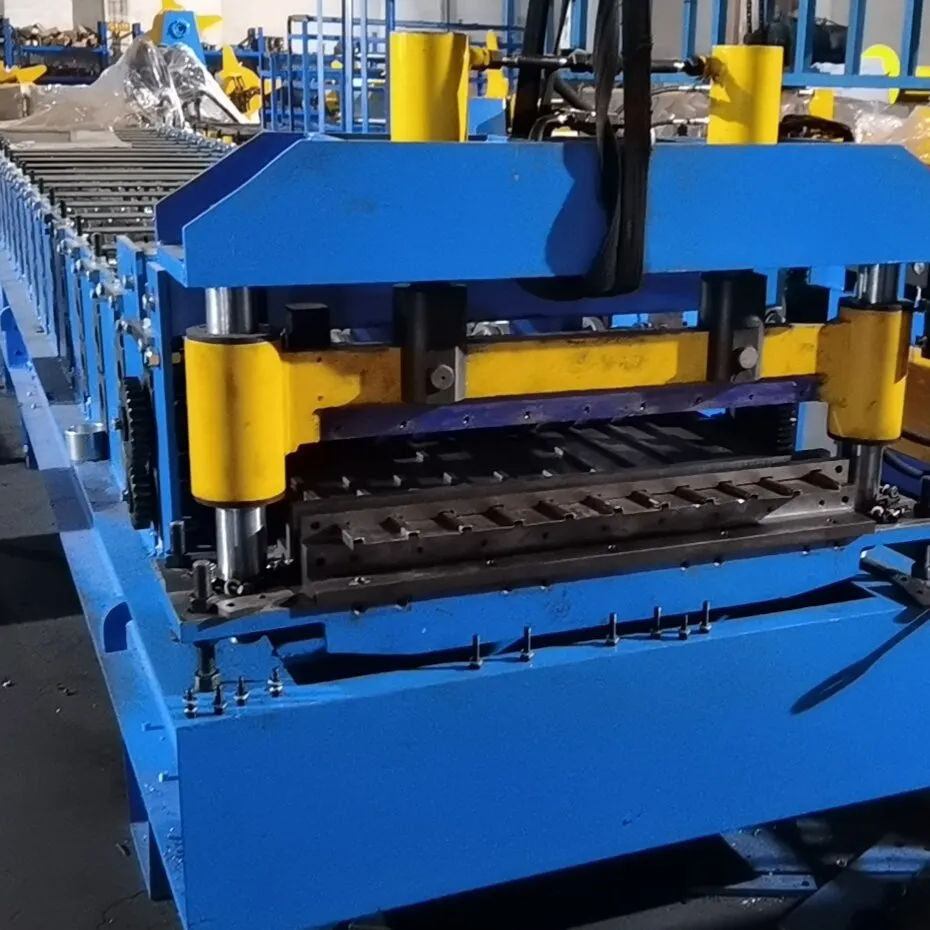
The manufacturing process executed by a wall panel roll forming machine is a sophisticated sequence of operations designed to convert raw coiled metal into precisely shaped, finished wall panels. Each stage is critical to the final product's quality and dimensional accuracy.
Core Stages:
-
1. Decoiling and Loading:
The process begins with an uncoiler (decoiler) that holds the large metal coil (e.g., galvanized steel, pre-painted aluminum, or Zincalume). This unit unwinds the coil smoothly, feeding the flat metal strip into the machine. Modern decoilers often feature hydraulic expansion for efficient coil loading and automatic speed control to synchronize with the main forming speed. The materials typically handled range from 0.4 mm to 1.2 mm in thickness, depending on the panel type and structural requirements.
-
2. Feeding and Guiding:
The uncoiled strip passes through a feeding and guiding section, ensuring that the material enters the roll forming station precisely centered and without deviation. This stage is crucial for maintaining consistent panel dimensions and preventing profile distortions. Adjustable side guides, often with roller bearings, minimize friction and material damage.
-
3. Roll Forming (Profiling):
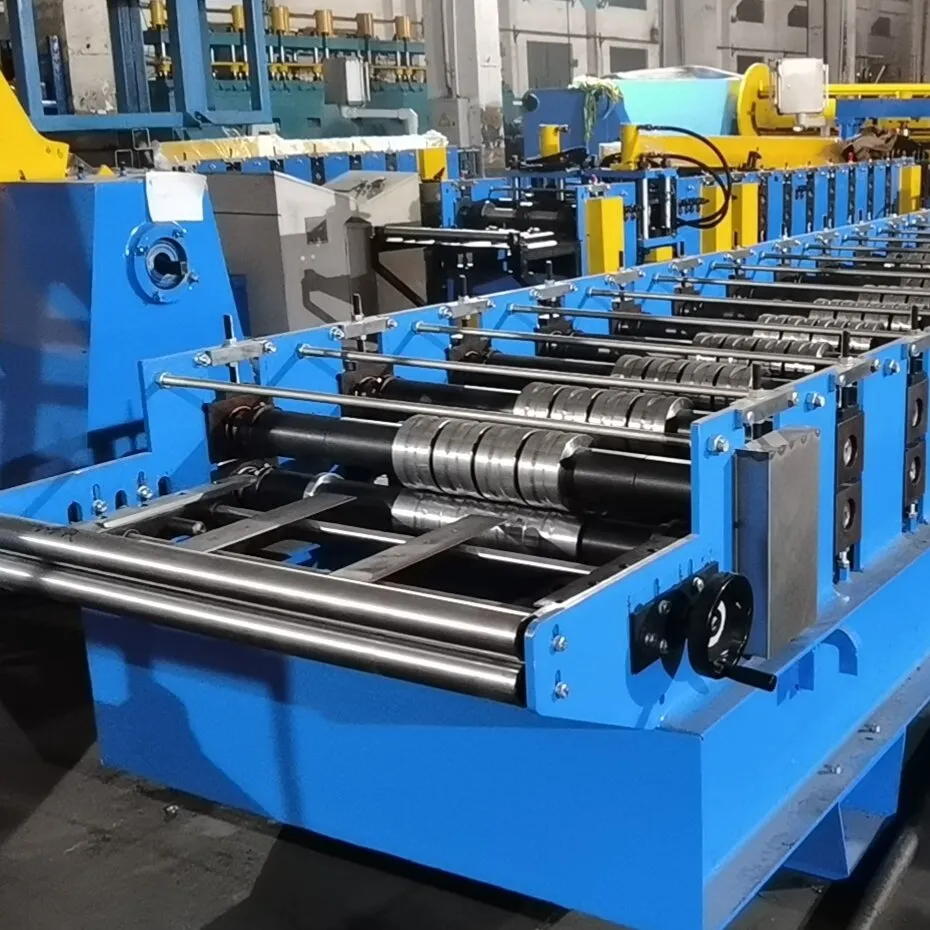
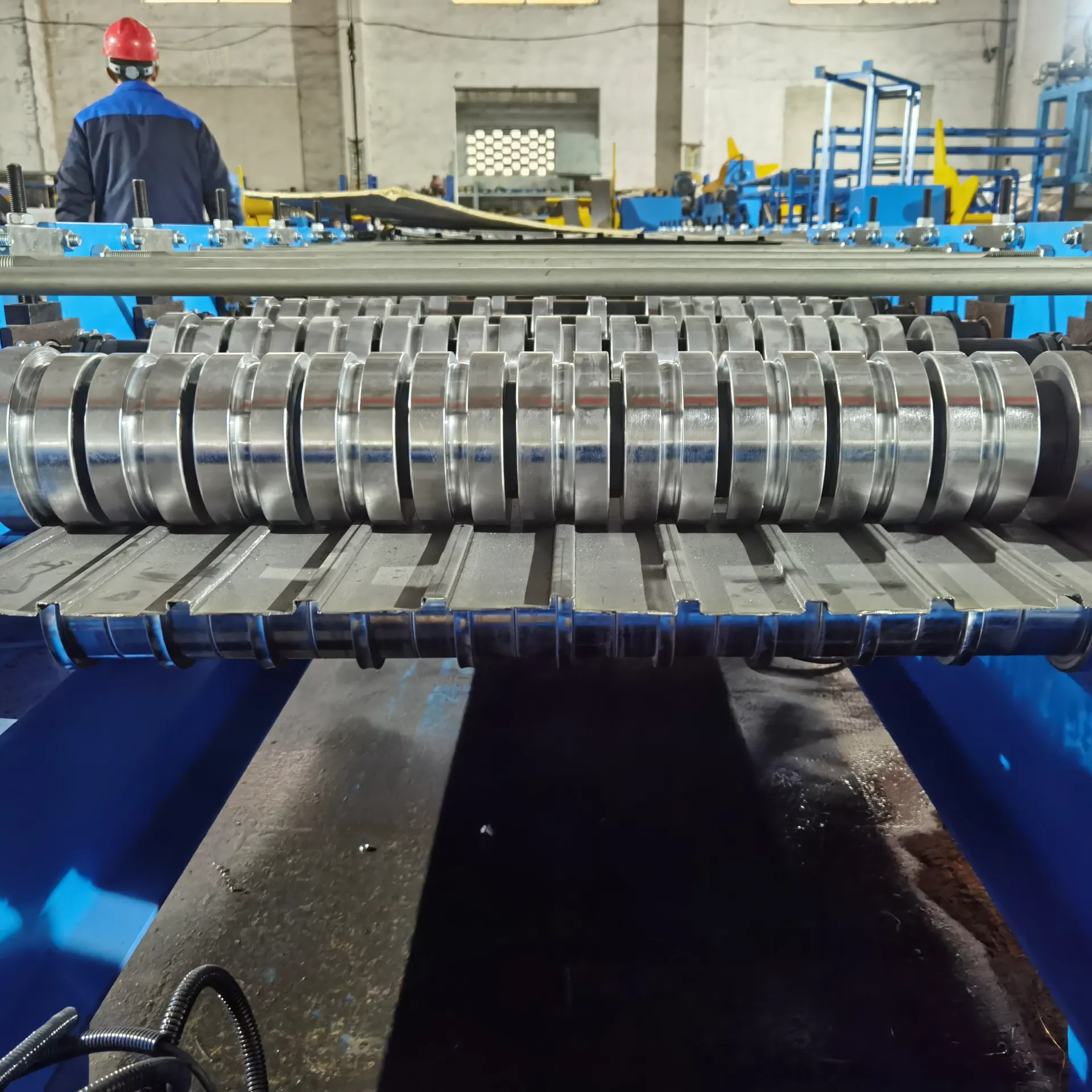
This is the heart of the metal wall panel machine. The flat strip sequentially passes through a series of precisely designed roller dies. Each set of rollers gradually bends and forms the metal into the desired panel profile. The roll tooling, typically made from high-grade alloy steel like Cr12 or GCr15, undergoes precision CNC machining and heat treatment (e.g., quenching, tempering) to achieve a surface hardness of HRC58-62, ensuring exceptional wear resistance and a long service life of 10-15 years or more. Drive shafts are commonly constructed from SAE1045 steel, subjected to induction hardening. The number of forming stations varies by profile complexity, typically ranging from 12 to 24 stations. This progressive forming minimizes stress on the material, preventing cracking or surface imperfections.
-
4. Cutting/Shearing:
Once the panel has achieved its final profile, it moves to an automated cutting unit. This can be a hydraulic or pneumatic shearing system, or a flying saw for thicker materials. The cutting length is precisely controlled by a PLC system, ensuring exact panel lengths according to pre-programmed specifications. The cutting dies are also precision-machined from high-grade tool steel (e.g., Cr12Mov) for durability and clean cuts.
-
5. Outfeed and Stacking:
The cut panels are then discharged onto an outfeed table, often equipped with an automated stacking system for efficient bundling and preparation for transport. This stage can include pneumatic ejectors or robotic arms for high-volume lines.
Manufacturing Processes of Machine Components:
- Rollers: Forging, CNC precision turning, heat treatment (quenching and tempering), grinding, and hard chrome plating for enhanced wear resistance.
- Shafts: High-grade steel bars (SAE1045) are cut, turned, milled, and keyways are machined. Induction hardening often applied to critical wear surfaces.
- Frame: Welded structure from high-strength structural steel (e.g., Q235, Q345), stress-relieved after welding, then precision milled on gantry machining centers to ensure parallelism and perpendicularity.
- Cutting Dies: Precision wire-cut EDM or CNC milling from Cr12Mov tool steel, followed by vacuum heat treatment to achieve optimal hardness and toughness.
Testing Standards and Service Life:
Machines and their components adhere to stringent international standards. Key components are manufactured and tested to ISO 9001:2015 quality management systems. Electrical systems comply with CE standards. Bearing tolerances meet ANSI/ABMA standards. The typical service life for a well-maintained wall panel roll forming machine is 15-25 years, with critical components designed for sustained operation under industrial loads. Routine maintenance and replacement of wear parts can extend this significantly.
Target Industries and Application Scenarios:
The versatility of metal wall panels means the machines find application across a broad spectrum of industries:
- Construction: Industrial buildings, warehouses, commercial complexes, agricultural structures, cold storage facilities. Advantages: Rapid construction, long lifespan, low maintenance.
- Petrochemical: Cladding for industrial plants, insulation panels for tanks and piping. Advantages: Excellent corrosion resistance (when using suitable material like coated steel), fire resistance, thermal insulation properties.
- Metallurgy: Protective coverings for smelting facilities, roofing for processing plants. Advantages: Durability in harsh environments, structural stability.
- Water Supply & Drainage: Pump stations, treatment plant enclosures. Advantages: Moisture resistance, ease of cleaning, energy saving through insulation properties.
Technical Specifications and Parameters
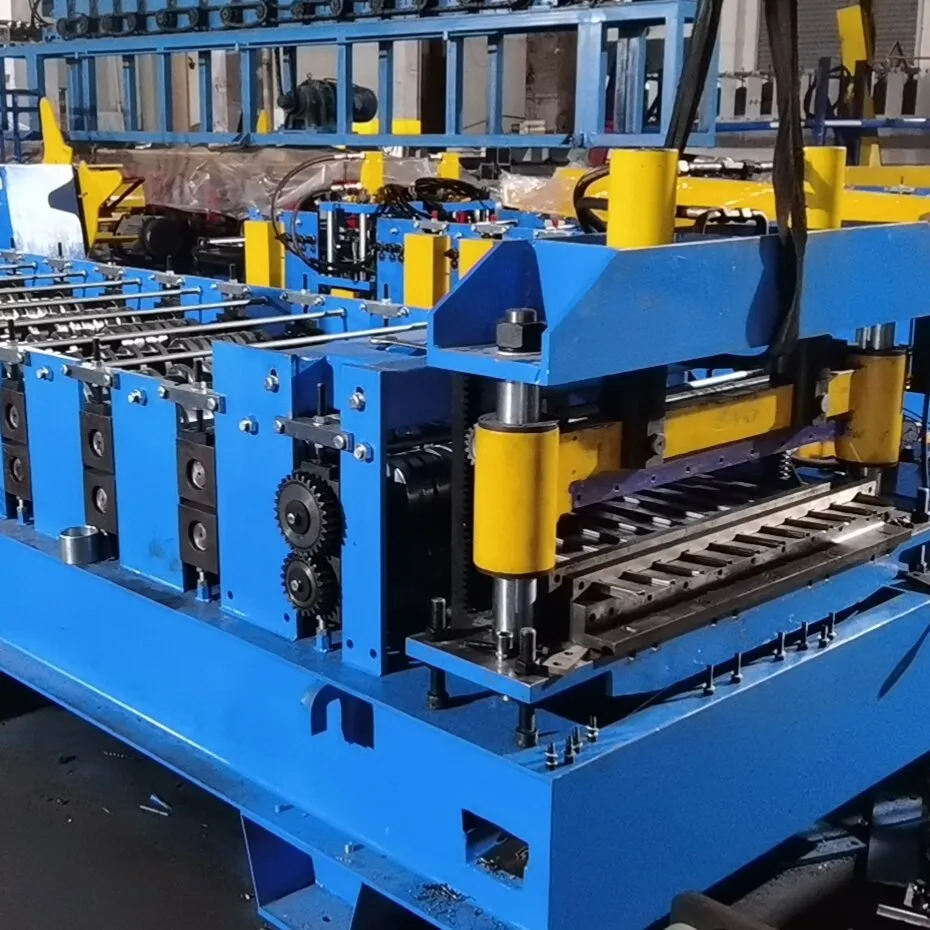
The performance of a wall panel roll forming machine is defined by its robust technical specifications. These parameters dictate its capabilities, efficiency, and suitability for various production demands. Below is a representative table of common specifications for a high-performance metal wall panel machine.
Typical Product Specification Table:
| Parameter | Specification | Description |
|---|---|---|
| Material Thickness Range | 0.4 - 1.2 mm | Suitable for galvanized, pre-painted, aluminum, Zincalume, and stainless steel. |
| Material Width | Up to 1250 mm | Standard coil width for various panel profiles. |
| Forming Speed | 10 - 25 m/min (adjustable) | Dependent on material thickness and profile complexity. |
| Roller Stations | 16 - 22 groups | Number of forming passes for gradual and precise profiling. |
| Roll Material | Cr12 (SKD11 equivalent), HRC 58-62 | Precision CNC machined, heat-treated, and polished for durability. |
| Main Motor Power | 7.5 kW - 15 kW | High-efficiency motor with frequency converter for speed control. |
| Hydraulic System Power | 5.5 kW | Powers cutting and decoiling operations (if hydraulic). |
| Control System | PLC (e.g., Siemens, Panasonic) with HMI Touch Screen | Intuitive operation, diagnostic capabilities, production tracking. |
| Power Supply | 380V/50Hz/3Phase (customizable) | Standard industrial electrical requirements. |
| Machine Dimensions (Approx.) | 7500L x 1500W x 1500H mm | Compact footprint for industrial environments. |
| Weight (Approx.) | 6,000 - 10,000 kg | Indicates robust construction and heavy-duty components. |
These specifications underscore the robust engineering required for continuous, high-precision operation. The selection of materials like Cr12 steel for rollers and high-grade structural steel for the machine frame, combined with advanced heat treatment and CNC machining, guarantees the longevity and performance expected from a top-tier wall panel roll forming machine.
Core Technical Advantages of Advanced Roll Forming
Modern wall panel roll forming machine designs integrate several technical advantages that translate directly into operational benefits and superior product quality. These advantages are critical for businesses aiming to optimize production and maintain a competitive edge.
- High Precision and Consistency: Advanced PLC control systems and high-resolution encoders ensure micron-level accuracy in panel length and profile geometry. This consistency is vital for seamless installation and adherence to architectural designs.
- Enhanced Material Efficiency: Optimized roll tooling design minimizes material waste, and precise cutting reduces scrap rates, contributing to a lower overall wall panel roll forming machine price over its lifecycle due to reduced input costs.
- Durability and Longevity: Use of premium materials for critical components (e.g., GCr15 bearings, Cr12 forming rollers, SAE1045 drive shafts) combined with stringent manufacturing processes like heat treatment, forging, and CNC machining ensures exceptional machine lifespan and reduced maintenance needs.
- Operational Versatility: Quick changeover systems and modular designs allow for the rapid production of multiple panel profiles with minimal downtime, making them ideal for diverse project requirements. This flexibility enhances the value proposition of a metal wall panel machine.
- Energy Efficiency: Modern machines incorporate energy-saving servo drives and hydraulic units, reducing power consumption significantly compared to older models. This contributes to lower operating expenses and a smaller carbon footprint.
- User-Friendly Interface: Intuitive HMI touch screens with multi-language support simplify operation, diagnostics, and parameter adjustments, reducing training time and potential for operator error.
- Safety Features: Comprehensive safety interlocks, emergency stop buttons, and protective guarding comply with international safety standards (e.g., CE) to ensure operator protection.
These technical strengths position advanced roll forming machines as indispensable assets for high-quality, high-volume panel production across demanding industrial and commercial sectors.
Vendor Comparison: Evaluating Wall Panel Roll Forming Machine Suppliers
Choosing the right wall panel roll forming machine vendor involves more than just comparing initial wall panel roll forming machine price tags. It requires a comprehensive evaluation of machine specifications, build quality, technological integration, and post-sales support. Below is a comparative overview highlighting key differentiating factors.
Comparative Analysis of Roll Forming Machine Vendors:
| Feature/Parameter | Yowin Machine (Example) | Competitor A (General) | Competitor B (Budget) |
|---|---|---|---|
| Control System | Siemens/Panasonic PLC, HMI with remote diagnostics | Local brand PLC, basic display | Basic PLC, push-button controls |
| Roll Tooling Material | Cr12 (SKD11), HRC 58-62, Hard Chrome Plated | 45# Steel, HRC 52-55 | 40Cr, no specific hardness/plating |
| Drive System | Gearbox & Chain Drive, high-precision bearings | Chain Drive, standard bearings | Simple Chain Drive, generic bearings |
| Frame Construction | Q345 Welded Structure, stress-relieved, gantry milled | Q235 Welded Structure | Simple Angle Steel Structure |
| Forming Speed (Max) | 25 m/min | 18 m/min | 12 m/min |
| Customization Capability | High (extensive oem wall panel roll forming machine options) | Medium (limited profile options) | Low (standard profiles only) |
| Warranty & Support | 12-18 months, 24/7 online support, field service | 12 months, limited online support | 6 months, basic support |
| Certifications | ISO 9001, CE | CE | None stated or local only |
As illustrated, a premium vendor like Yowin Machine emphasizes advanced control systems, superior material quality for tooling, robust frame construction, and comprehensive support. While the initial wall panel roll forming machine price might be higher, the long-term benefits in terms of reliability, precision, throughput, and reduced downtime offer a significantly better return on investment. Budget options often compromise on critical components and long-term performance, leading to higher operational costs and shorter service life.
Customized Solutions and OEM Capabilities
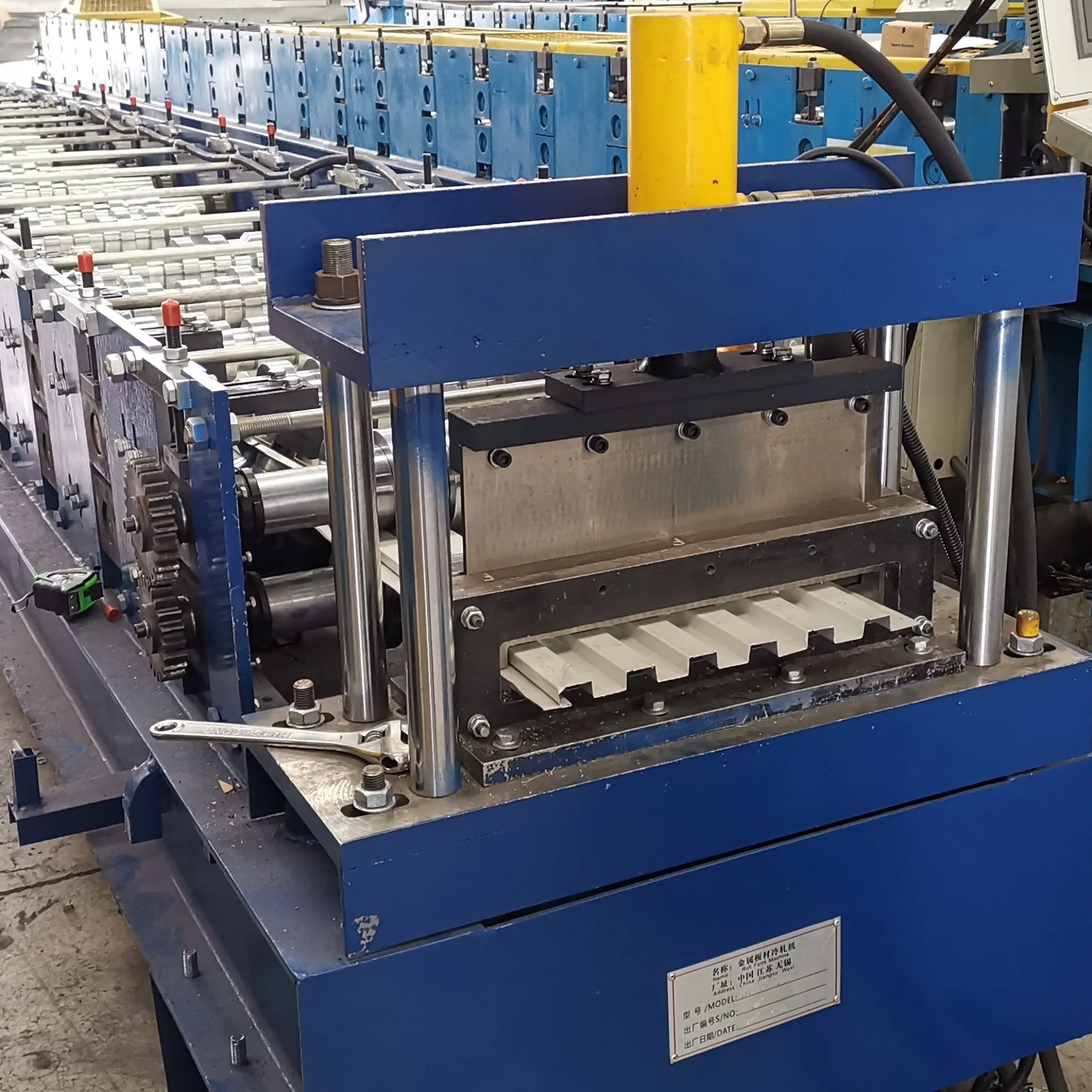
Recognizing that standard offerings do not always meet unique project demands, leading manufacturers of wall panel roll forming machine equipment offer extensive customization and OEM capabilities. This allows clients to specify machines perfectly aligned with their operational requirements, panel profiles, and material preferences.
Key Customization Options:
- Profile Design: Development of bespoke roller tooling for unique panel profiles, interlocking systems, or architectural aesthetics. This is a primary aspect of oem wall panel roll forming machine services.
- Material Handling: Custom decoiler capacities (e.g., up to 15-ton coils), specific material tensioning systems, or protective film applicators for pre-finished metals.
- Speed and Throughput: Optimization of motor power, forming stations, and cutting mechanisms to achieve specific production rates, from economic 10 m/min lines to high-speed 30 m/min+ systems.
- Integrated Systems: Addition of inline punching, embossing, slitting, or insulation filling capabilities to create a fully integrated production line.
- Control System Features: Advanced software integration for production scheduling, remote diagnostics, SCADA compatibility, or multi-language HMI.
- Safety and Compliance: Adherence to specific regional safety standards (e.g., OSHA, Machinery Directive 2006/42/EC) beyond standard CE certification.
Engaging with an experienced metal wall panel machine OEM ensures that every aspect of the machine, from conceptual design to final commissioning, is engineered to client specifications, providing a competitive advantage in specialized markets.
Real-World Application Case Studies (Simulated)
Case Study 1: Large-Scale Industrial Warehouse Project, UAE
A leading construction firm in the UAE required a high-capacity wall panel roll forming machine for a sprawling logistics hub. The project demanded approximately 500,000 square meters of insulated metal wall panels with a specific interlocking profile. Our customized metal wall panel machine was designed to process 0.6mm pre-painted galvanized steel at a consistent speed of 20 m/min, operating 18 hours daily. Key features included an automated film applicator to protect the pre-painted surface and a robust stacking system. Client feedback indicated a 30% reduction in panel installation time due to the precise dimensions and consistent quality, leading to project completion ahead of schedule. The machine demonstrated exceptional resilience in the demanding desert environment, requiring minimal unscheduled maintenance over its initial two years of operation, confirming its long-term reliability.
Case Study 2: Energy-Efficient Building Solutions, Germany
A German prefabrication company specializing in energy-neutral buildings sought an oem wall panel roll forming machine capable of producing complex panel profiles for integrated insulation. The challenge was to form thin-gauge aluminum (0.5mm) with extreme precision while maintaining aesthetic integrity. Our engineering team developed specialized low-stress roll tooling from Cr12Mov steel, coupled with a high-accuracy servo-driven cutting system. The machine achieved a dimensional tolerance of ±0.5mm over a 6-meter panel length, which was critical for the tight building envelope specifications. The client praised the machine's energy efficiency (reporting 15% lower power consumption than their previous unit) and the unparalleled surface quality of the formed panels, which significantly reduced rework and scrap rates. This bespoke wall panel roll forming machine solution allowed them to produce innovative, high-performance building components.
Ensuring Quality and Reliability (Authoritativeness & Expertise)
Our commitment to quality and engineering excellence is paramount. We adhere to rigorous standards throughout the design, manufacturing, and testing phases of every wall panel roll forming machine.
Certifications and Quality Assurance:
- ISO 9001:2015 Certified Manufacturing: Our production facilities operate under strict quality management systems, ensuring consistent product quality and process efficiency.
- CE Compliance: All electrical and mechanical components are designed and manufactured to meet European Union CE safety and environmental standards.
- Component Sourcing: We partner with internationally recognized suppliers for critical components such as Siemens/Panasonic PLCs, Schneider/Omron electrical parts, and world-class bearings, ensuring global compatibility and reliability.
- Rigorous Testing: Every metal wall panel machine undergoes extensive factory acceptance testing (FAT) for several days, verifying all functions, speed, precision, and safety interlocks before shipment. Test reports, including dimensional accuracy and run-out, are provided to clients.
Industry Expertise and Experience:
With over 20 years of experience in the roll forming industry, our engineering team possesses deep domain expertise in metallurgy, mechanical design, and automation. This accumulated knowledge allows us to design and build machines that excel in performance and durability. Our long-standing relationships with clients across various sectors globally underscore our proven track record and authoritative standing in the field of customized roll forming solutions.
Trust and Support: Your Partner in Roll Forming Success (Trustworthiness)
Investing in a wall panel roll forming machine is a significant decision. We build trust through transparency, reliable support, and clear commitments.
Frequently Asked Questions (FAQ):
Q: What is the typical lead time for an oem wall panel roll forming machine?
A: For standard configurations, lead time is typically 60-90 business days from deposit receipt. Customized solutions or oem wall panel roll forming machine designs may require 90-120 days, depending on complexity. We provide a detailed project timeline upon order confirmation.
Q: What kind of warranty do you offer?
A: We offer a 12-month full parts warranty from the date of commissioning or 18 months from the date of shipment, whichever comes first. This covers manufacturing defects and component failures under normal operating conditions. Wear parts are excluded.
Q: How do you handle after-sales support and spare parts?
A: Our dedicated technical support team is available 24/7 via phone, email, and remote diagnostics. We maintain a comprehensive inventory of spare parts for all our metal wall panel machine models, ensuring quick dispatch to minimize downtime. On-site technical support and training can also be arranged globally.
Q: Can your machines produce different panel profiles?
A: Yes, many of our wall panel roll forming machine models are designed for quick tooling changes, allowing production of various profiles. For significantly different profiles, additional sets of roller tooling may be required, which can be custom-designed.
Lead Time and Fulfillment:
Our streamlined production process and efficient supply chain management ensure timely delivery. We provide clear communication on manufacturing progress and shipping logistics, from ex-works to CIF Incoterms, as per client requirements.
Customer Support and Service Commitment:
We believe in fostering long-term partnerships. Our commitment extends beyond the sale, offering comprehensive support for installation, operator training, routine maintenance guidance, and prompt troubleshooting. Our global network of technicians and agents ensures responsive local support wherever our machines operate.
Conclusion
The modern wall panel roll forming machine represents the pinnacle of precision engineering and industrial automation. Its ability to consistently produce high-quality, durable, and aesthetically versatile metal wall panels makes it an indispensable asset across diverse industries. By understanding the intricate process flow, leveraging advanced technical specifications, and partnering with reputable manufacturers offering robust support and customization, businesses can significantly enhance their manufacturing capabilities and achieve superior project outcomes. The continuous evolution of these machines promises even greater efficiency, versatility, and intelligent integration in the future of construction and fabrication.
References:
- Roll Forming Handbook. (2002). George T. Halmos. CRC Press.
- Metal Forming: Mechanics and Metallurgy. (2007). William F. Hosford, Robert M. Caddell. Cambridge University Press.
- The American Society of Mechanical Engineers (ASME) Standards. Retrieved from asme.org.
- International Organization for Standardization (ISO) Standards. Retrieved from iso.org.
- European Committee for Standardization (CEN) - CE Marking Guidelines. Retrieved from cencenelec.eu.
The Evolution and Impact of wall panel roll forming machine Technology
In the rapidly evolving landscape of construction and industrial fabrication, the efficiency and precision of manufacturing equipment are paramount. The wall panel roll forming machine stands as a cornerstone technology, enabling the high-volume production of metal wall panels critical for a myriad of applications. These machines transform flat metal coils into custom-profiled panels, offering superior structural integrity, aesthetic appeal, and rapid installation for modern buildings. This detailed overview explores the technical intricacies, market dynamics, and operational advantages that define the leading edge in roll forming technology.
Current Industry Trends and Market Drivers
The demand for advanced roll forming solutions is driven by several key industry trends. Sustainability initiatives are pushing for lighter, more durable, and energy-efficient building materials, positioning metal wall panels as an ideal choice. Automation and smart manufacturing principles, often leveraging IoT and AI, are integrated into modern wall panel roll forming machine designs to enhance precision, reduce waste, and minimize manual intervention. Furthermore, the global infrastructure boom, particularly in developing economies, fuels the need for cost-effective and rapid construction methods. The market for metal wall panel machine solutions is seeing significant growth, spurred by innovations in material science allowing for a wider range of pre-painted and corrosion-resistant steel and aluminum alloys.
- Increased Automation: Integration of PLC control systems, HMI interfaces, and real-time data monitoring for optimized production.
- Material Versatility: Expanding capabilities to process various gauges and types of steel (e.g., galvanized, pre-painted, stainless), aluminum, and copper.
- Energy Efficiency: Development of more efficient motor drives and hydraulic systems to reduce operational costs.
- Customization Demand: Higher expectations for oem wall panel roll forming machine solutions tailored to specific architectural profiles and project requirements.
- Digital Integration: Adoption of CAD/CAM integration for seamless design-to-production workflows.
Understanding the competitive landscape and anticipating future demands is crucial for manufacturers investing in high-performance roll forming technology. The wall panel roll forming machine price reflects not only the complexity and robust construction but also the integrated technologies that deliver long-term value through efficiency and product quality.
Detailed Process Flow of a Wall Panel Roll Forming Machine
The manufacturing process executed by a wall panel roll forming machine is a sophisticated sequence of operations designed to convert raw coiled metal into precisely shaped, finished wall panels. Each stage is critical to the final product's quality and dimensional accuracy.
Core Stages:
-
1. Decoiling and Loading:
The process begins with an uncoiler (decoiler) that holds the large metal coil (e.g., galvanized steel, pre-painted aluminum, or Zincalume). This unit unwinds the coil smoothly, feeding the flat metal strip into the machine. Modern decoilers often feature hydraulic expansion for efficient coil loading and automatic speed control to synchronize with the main forming speed. The materials typically handled range from 0.4 mm to 1.2 mm in thickness, depending on the panel type and structural requirements.
-
2. Feeding and Guiding:
The uncoiled strip passes through a feeding and guiding section, ensuring that the material enters the roll forming station precisely centered and without deviation. This stage is crucial for maintaining consistent panel dimensions and preventing profile distortions. Adjustable side guides, often with roller bearings, minimize friction and material damage.
-
3. Roll Forming (Profiling):
This is the heart of the metal wall panel machine. The flat strip sequentially passes through a series of precisely designed roller dies. Each set of rollers gradually bends and forms the metal into the desired panel profile. The roll tooling, typically made from high-grade alloy steel like Cr12 or GCr15, undergoes precision CNC machining and heat treatment (e.g., quenching, tempering) to achieve a surface hardness of HRC58-62, ensuring exceptional wear resistance and a long service life of 10-15 years or more. Drive shafts are commonly constructed from SAE1045 steel, subjected to induction hardening. The number of forming stations varies by profile complexity, typically ranging from 12 to 24 stations. This progressive forming minimizes stress on the material, preventing cracking or surface imperfections.
-
4. Cutting/Shearing:
Once the panel has achieved its final profile, it moves to an automated cutting unit. This can be a hydraulic or pneumatic shearing system, or a flying saw for thicker materials. The cutting length is precisely controlled by a PLC system, ensuring exact panel lengths according to pre-programmed specifications. The cutting dies are also precision-machined from high-grade tool steel (e.g., Cr12Mov) for durability and clean cuts.
-
5. Outfeed and Stacking:
The cut panels are then discharged onto an outfeed table, often equipped with an automated stacking system for efficient bundling and preparation for transport. This stage can include pneumatic ejectors or robotic arms for high-volume lines.
Manufacturing Processes of Machine Components:
- Rollers: Forging, CNC precision turning, heat treatment (quenching and tempering), grinding, and hard chrome plating for enhanced wear resistance.
- Shafts: High-grade steel bars (SAE1045) are cut, turned, milled, and keyways are machined. Induction hardening often applied to critical wear surfaces.
- Frame: Welded structure from high-strength structural steel (e.g., Q235, Q345), stress-relieved after welding, then precision milled on gantry machining centers to ensure parallelism and perpendicularity.
- Cutting Dies: Precision wire-cut EDM or CNC milling from Cr12Mov tool steel, followed by vacuum heat treatment to achieve optimal hardness and toughness.
Testing Standards and Service Life:
Machines and their components adhere to stringent international standards. Key components are manufactured and tested to ISO 9001:2015 quality management systems. Electrical systems comply with CE standards. Bearing tolerances meet ANSI/ABMA standards. The typical service life for a well-maintained wall panel roll forming machine is 15-25 years, with critical components designed for sustained operation under industrial loads. Routine maintenance and replacement of wear parts can extend this significantly.
Target Industries and Application Scenarios:
The versatility of metal wall panels means the machines find application across a broad spectrum of industries:
- Construction: Industrial buildings, warehouses, commercial complexes, agricultural structures, cold storage facilities. Advantages: Rapid construction, long lifespan, low maintenance.
- Petrochemical: Cladding for industrial plants, insulation panels for tanks and piping. Advantages: Excellent corrosion resistance (when using suitable material like coated steel), fire resistance, thermal insulation properties.
- Metallurgy: Protective coverings for smelting facilities, roofing for processing plants. Advantages: Durability in harsh environments, structural stability.
- Water Supply & Drainage: Pump stations, treatment plant enclosures. Advantages: Moisture resistance, ease of cleaning, energy saving through insulation properties.
Technical Specifications and Parameters
The performance of a wall panel roll forming machine is defined by its robust technical specifications. These parameters dictate its capabilities, efficiency, and suitability for various production demands. Below is a representative table of common specifications for a high-performance metal wall panel machine.
Typical Product Specification Table:
| Parameter | Specification | Description |
|---|---|---|
| Material Thickness Range | 0.4 - 1.2 mm | Suitable for galvanized, pre-painted, aluminum, Zincalume, and stainless steel. |
| Material Width | Up to 1250 mm | Standard coil width for various panel profiles. |
| Forming Speed | 10 - 25 m/min (adjustable) | Dependent on material thickness and profile complexity. |
| Roller Stations | 16 - 22 groups | Number of forming passes for gradual and precise profiling. |
| Roll Material | Cr12 (SKD11 equivalent), HRC 58-62 | Precision CNC machined, heat-treated, and polished for durability. |
| Main Motor Power | 7.5 kW - 15 kW | High-efficiency motor with frequency converter for speed control. |
| Hydraulic System Power | 5.5 kW | Powers cutting and decoiling operations (if hydraulic). |
| Control System | PLC (e.g., Siemens, Panasonic) with HMI Touch Screen | Intuitive operation, diagnostic capabilities, production tracking. |
| Power Supply | 380V/50Hz/3Phase (customizable) | Standard industrial electrical requirements. |
| Machine Dimensions (Approx.) | 7500L x 1500W x 1500H mm | Compact footprint for industrial environments. |
| Weight (Approx.) | 6,000 - 10,000 kg | Indicates robust construction and heavy-duty components. |
These specifications underscore the robust engineering required for continuous, high-precision operation. The selection of materials like Cr12 steel for rollers and high-grade structural steel for the machine frame, combined with advanced heat treatment and CNC machining, guarantees the longevity and performance expected from a top-tier wall panel roll forming machine.
Core Technical Advantages of Advanced Roll Forming
Modern wall panel roll forming machine designs integrate several technical advantages that translate directly into operational benefits and superior product quality. These advantages are critical for businesses aiming to optimize production and maintain a competitive edge.
- High Precision and Consistency: Advanced PLC control systems and high-resolution encoders ensure micron-level accuracy in panel length and profile geometry. This consistency is vital for seamless installation and adherence to architectural designs.
- Enhanced Material Efficiency: Optimized roll tooling design minimizes material waste, and precise cutting reduces scrap rates, contributing to a lower overall wall panel roll forming machine price over its lifecycle due to reduced input costs.
- Durability and Longevity: Use of premium materials for critical components (e.g., GCr15 bearings, Cr12 forming rollers, SAE1045 drive shafts) combined with stringent manufacturing processes like heat treatment, forging, and CNC machining ensures exceptional machine lifespan and reduced maintenance needs.
- Operational Versatility: Quick changeover systems and modular designs allow for the rapid production of multiple panel profiles with minimal downtime, making them ideal for diverse project requirements. This flexibility enhances the value proposition of a metal wall panel machine.
- Energy Efficiency: Modern machines incorporate energy-saving servo drives and hydraulic units, reducing power consumption significantly compared to older models. This contributes to lower operating expenses and a smaller carbon footprint.
- User-Friendly Interface: Intuitive HMI touch screens with multi-language support simplify operation, diagnostics, and parameter adjustments, reducing training time and potential for operator error.
- Safety Features: Comprehensive safety interlocks, emergency stop buttons, and protective guarding comply with international safety standards (e.g., CE) to ensure operator protection.
These technical strengths position advanced roll forming machines as indispensable assets for high-quality, high-volume panel production across demanding industrial and commercial sectors.
Vendor Comparison: Evaluating Wall Panel Roll Forming Machine Suppliers
Choosing the right wall panel roll forming machine vendor involves more than just comparing initial wall panel roll forming machine price tags. It requires a comprehensive evaluation of machine specifications, build quality, technological integration, and post-sales support. Below is a comparative overview highlighting key differentiating factors.
Comparative Analysis of Roll Forming Machine Vendors:
| Feature/Parameter | Yowin Machine (Example) | Competitor A (General) | Competitor B (Budget) |
|---|---|---|---|
| Control System | Siemens/Panasonic PLC, HMI with remote diagnostics | Local brand PLC, basic display | Basic PLC, push-button controls |
| Roll Tooling Material | Cr12 (SKD11), HRC 58-62, Hard Chrome Plated | 45# Steel, HRC 52-55 | 40Cr, no specific hardness/plating |
| Drive System | Gearbox & Chain Drive, high-precision bearings | Chain Drive, standard bearings | Simple Chain Drive, generic bearings |
| Frame Construction | Q345 Welded Structure, stress-relieved, gantry milled | Q235 Welded Structure | Simple Angle Steel Structure |
| Forming Speed (Max) | 25 m/min | 18 m/min | 12 m/min |
| Customization Capability | High (extensive oem wall panel roll forming machine options) | Medium (limited profile options) | Low (standard profiles only) |
| Warranty & Support | 12-18 months, 24/7 online support, field service | 12 months, limited online support | 6 months, basic support |
| Certifications | ISO 9001, CE | CE | None stated or local only |
As illustrated, a premium vendor like Yowin Machine emphasizes advanced control systems, superior material quality for tooling, robust frame construction, and comprehensive support. While the initial wall panel roll forming machine price might be higher, the long-term benefits in terms of reliability, precision, throughput, and reduced downtime offer a significantly better return on investment. Budget options often compromise on critical components and long-term performance, leading to higher operational costs and shorter service life.
Customized Solutions and OEM Capabilities
Recognizing that standard offerings do not always meet unique project demands, leading manufacturers of wall panel roll forming machine equipment offer extensive customization and OEM capabilities. This allows clients to specify machines perfectly aligned with their operational requirements, panel profiles, and material preferences.
Key Customization Options:
- Profile Design: Development of bespoke roller tooling for unique panel profiles, interlocking systems, or architectural aesthetics. This is a primary aspect of oem wall panel roll forming machine services.
- Material Handling: Custom decoiler capacities (e.g., up to 15-ton coils), specific material tensioning systems, or protective film applicators for pre-finished metals.
- Speed and Throughput: Optimization of motor power, forming stations, and cutting mechanisms to achieve specific production rates, from economic 10 m/min lines to high-speed 30 m/min+ systems.
- Integrated Systems: Addition of inline punching, embossing, slitting, or insulation filling capabilities to create a fully integrated production line.
- Control System Features: Advanced software integration for production scheduling, remote diagnostics, SCADA compatibility, or multi-language HMI.
- Safety and Compliance: Adherence to specific regional safety standards (e.g., OSHA, Machinery Directive 2006/42/EC) beyond standard CE certification.
Engaging with an experienced metal wall panel machine OEM ensures that every aspect of the machine, from conceptual design to final commissioning, is engineered to client specifications, providing a competitive advantage in specialized markets.
Real-World Application Case Studies (Simulated)
Case Study 1: Large-Scale Industrial Warehouse Project, UAE
A leading construction firm in the UAE required a high-capacity wall panel roll forming machine for a sprawling logistics hub. The project demanded approximately 500,000 square meters of insulated metal wall panels with a specific interlocking profile. Our customized metal wall panel machine was designed to process 0.6mm pre-painted galvanized steel at a consistent speed of 20 m/min, operating 18 hours daily. Key features included an automated film applicator to protect the pre-painted surface and a robust stacking system. Client feedback indicated a 30% reduction in panel installation time due to the precise dimensions and consistent quality, leading to project completion ahead of schedule. The machine demonstrated exceptional resilience in the demanding desert environment, requiring minimal unscheduled maintenance over its initial two years of operation, confirming its long-term reliability.
Case Study 2: Energy-Efficient Building Solutions, Germany
A German prefabrication company specializing in energy-neutral buildings sought an oem wall panel roll forming machine capable of producing complex panel profiles for integrated insulation. The challenge was to form thin-gauge aluminum (0.5mm) with extreme precision while maintaining aesthetic integrity. Our engineering team developed specialized low-stress roll tooling from Cr12Mov steel, coupled with a high-accuracy servo-driven cutting system. The machine achieved a dimensional tolerance of ±0.5mm over a 6-meter panel length, which was critical for the tight building envelope specifications. The client praised the machine's energy efficiency (reporting 15% lower power consumption than their previous unit) and the unparalleled surface quality of the formed panels, which significantly reduced rework and scrap rates. This bespoke wall panel roll forming machine solution allowed them to produce innovative, high-performance building components.
Ensuring Quality and Reliability (Authoritativeness & Expertise)
Our commitment to quality and engineering excellence is paramount. We adhere to rigorous standards throughout the design, manufacturing, and testing phases of every wall panel roll forming machine.
Certifications and Quality Assurance:
- ISO 9001:2015 Certified Manufacturing: Our production facilities operate under strict quality management systems, ensuring consistent product quality and process efficiency.
- CE Compliance: All electrical and mechanical components are designed and manufactured to meet European Union CE safety and environmental standards.
- Component Sourcing: We partner with internationally recognized suppliers for critical components such as Siemens/Panasonic PLCs, Schneider/Omron electrical parts, and world-class bearings, ensuring global compatibility and reliability.
- Rigorous Testing: Every metal wall panel machine undergoes extensive factory acceptance testing (FAT) for several days, verifying all functions, speed, precision, and safety interlocks before shipment. Test reports, including dimensional accuracy and run-out, are provided to clients.
Industry Expertise and Experience:
With over 20 years of experience in the roll forming industry, our engineering team possesses deep domain expertise in metallurgy, mechanical design, and automation. This accumulated knowledge allows us to design and build machines that excel in performance and durability. Our long-standing relationships with clients across various sectors globally underscore our proven track record and authoritative standing in the field of customized roll forming solutions.
Trust and Support: Your Partner in Roll Forming Success (Trustworthiness)
Investing in a wall panel roll forming machine is a significant decision. We build trust through transparency, reliable support, and clear commitments.
Frequently Asked Questions (FAQ):
Q: What is the typical lead time for an oem wall panel roll forming machine?
A: For standard configurations, lead time is typically 60-90 business days from deposit receipt. Customized solutions or oem wall panel roll forming machine designs may require 90-120 days, depending on complexity. We provide a detailed project timeline upon order confirmation.
Q: What kind of warranty do you offer?
A: We offer a 12-month full parts warranty from the date of commissioning or 18 months from the date of shipment, whichever comes first. This covers manufacturing defects and component failures under normal operating conditions. Wear parts are excluded.
Q: How do you handle after-sales support and spare parts?
A: Our dedicated technical support team is available 24/7 via phone, email, and remote diagnostics. We maintain a comprehensive inventory of spare parts for all our metal wall panel machine models, ensuring quick dispatch to minimize downtime. On-site technical support and training can also be arranged globally.
Q: Can your machines produce different panel profiles?
A: Yes, many of our wall panel roll forming machine models are designed for quick tooling changes, allowing production of various profiles. For significantly different profiles, additional sets of roller tooling may be required, which can be custom-designed.
Lead Time and Fulfillment:
Our streamlined production process and efficient supply chain management ensure timely delivery. We provide clear communication on manufacturing progress and shipping logistics, from ex-works to CIF Incoterms, as per client requirements.
Customer Support and Service Commitment:
We believe in fostering long-term partnerships. Our commitment extends beyond the sale, offering comprehensive support for installation, operator training, routine maintenance guidance, and prompt troubleshooting. Our global network of technicians and agents ensures responsive local support wherever our machines operate.
Conclusion
The modern wall panel roll forming machine represents the pinnacle of precision engineering and industrial automation. Its ability to consistently produce high-quality, durable, and aesthetically versatile metal wall panels makes it an indispensable asset across diverse industries. By understanding the intricate process flow, leveraging advanced technical specifications, and partnering with reputable manufacturers offering robust support and customization, businesses can significantly enhance their manufacturing capabilities and achieve superior project outcomes. The continuous evolution of these machines promises even greater efficiency, versatility, and intelligent integration in the future of construction and fabrication.
References:
- Roll Forming Handbook. (2002). George T. Halmos. CRC Press.
- Metal Forming: Mechanics and Metallurgy. (2007). William F. Hosford, Robert M. Caddell. Cambridge University Press.
- The American Society of Mechanical Engineers (ASME) Standards. Retrieved from asme.org.
- International Organization for Standardization (ISO) Standards. Retrieved from iso.org.
- European Committee for Standardization (CEN) - CE Marking Guidelines. Retrieved from cencenelec.eu.