
Floor Deck Roll Forming Machine | Fast, Precise, Durable
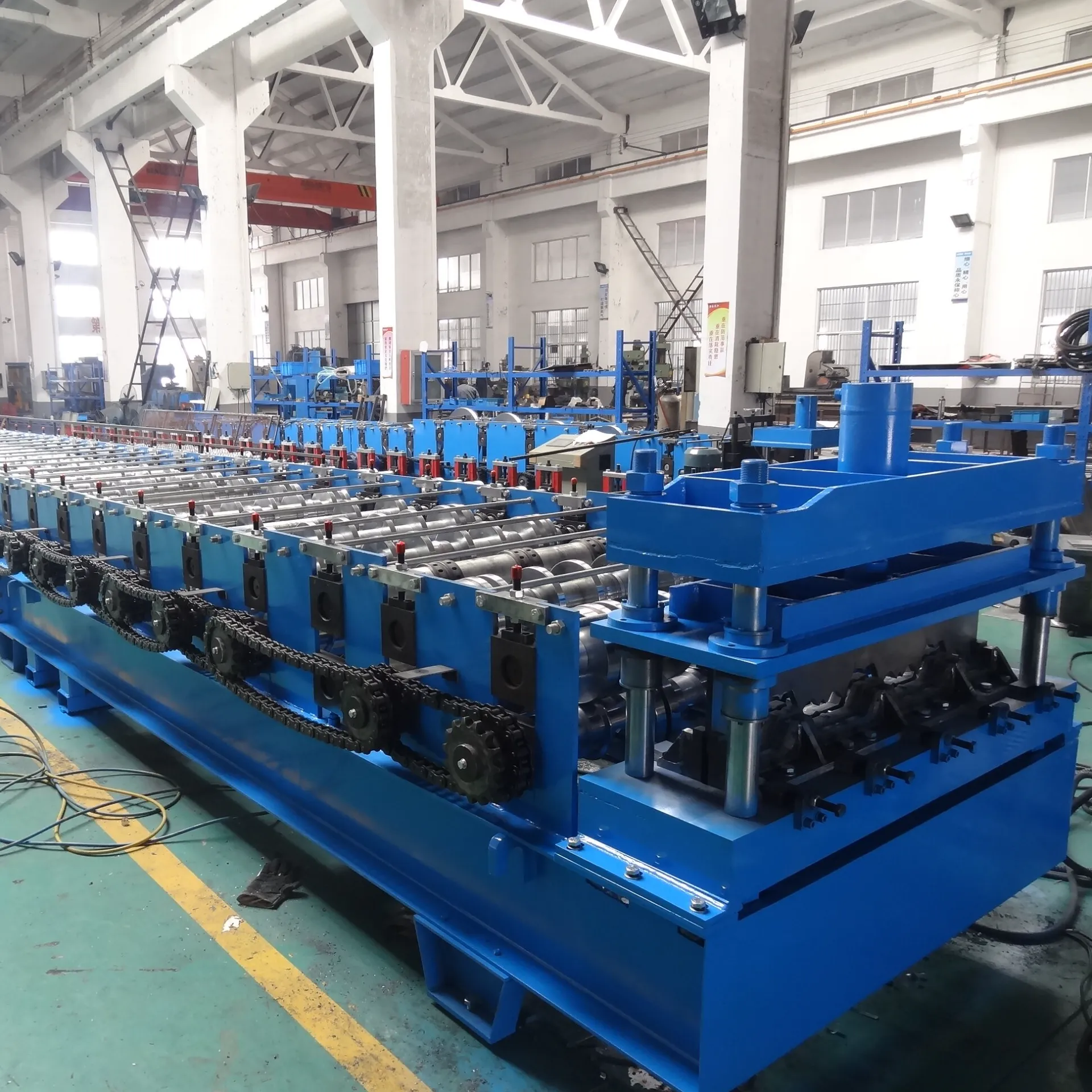
If you’ve ever watched a floor deck roll forming machine turn a coil into a clean, ribbed structural deck panel in seconds, you know the oddly soothing rhythm of a well-tuned line. I’ve stood beside more than a few—most recently in Shijiazhuang, China—and, to be honest, the hum of motors and the steady clatter of flying cut feels like a heartbeat of the modern jobsite.
What’s changing in decking lines right now
Two big trends: faster changeovers and smarter quality control. Many customers say they want profile switches in under an hour, real-time dimension checks, and fewer scrap starts. Vendors are responding with servo-assisted feeds, quick-adjust side guides, and inline cameras. Sustainability is in the mix too; energy-efficient drives and better chrome alternatives keep coming up in factory conversations.
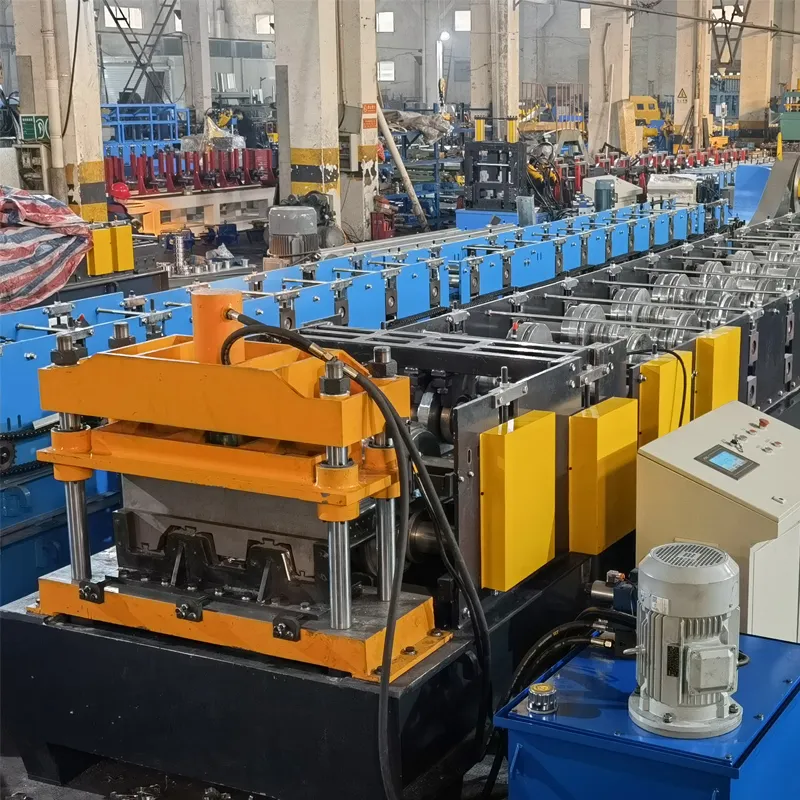
Key specs (real-world values, not lab fantasies)
| Guiding & feeding | Adjustable side handwheel (quick trim ≈ ±1 mm) |
| Rolling thickness | 0.6–1.5 mm (galvanized or galvalume; yield strengths vary) |
| Shaft diameter | Φ90 mm, precision turned |
| Motor power | 2 × 15 kW drive (≈ lower peak loads with VFD) |
| Forming speed | 0–20 m/min (actual with cutting ≈ 16–18 m/min) |
| Roll stations | 25 stations for stable, low-springback profiles |
| Roller material | 40Cr, quenched & tempered HB 220–260; hard chrome plated |
| Shear blade | Cr12MoV, HRC 58–62 after heat treatment |
| Origin | Room 5019, Beichen Square, No.19 Shifang Road, Chang'an District, Shijiazhuang, China |
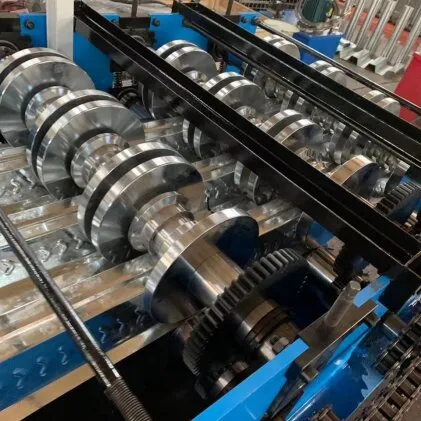
Process flow, materials, and testing
Coil loading → uncoiling → adjustable side-guiding → forming through 25 stations → inline length measurement → flying cut with Cr12MoV blade → automatic stacking. Typical materials: galvanized steel to ASTM A653/A653M or equivalent; yield strength around 280–550 MPa depending on deck design. Many builders ask for slip-resistance embossing; the line handles that, provided roll tooling is specified up front.
- Dimensional checks: profile depth/crest spacing; tolerance targets ≈ ±0.5 mm (real-world may vary).
- Hardness verification: ISO 6508-1 (Rockwell) on shear blades and sample coupons.
- Tensile sampling: ISO 6892-1 or ASTM A370 on incoming coils.
- Quality system: ISO 9001; CE compliance under 2006/42/EC is common for export.
- Service life: rollers ≈ 8–10 years; complete line ≈ 12–15 years with routine maintenance and clean lube.
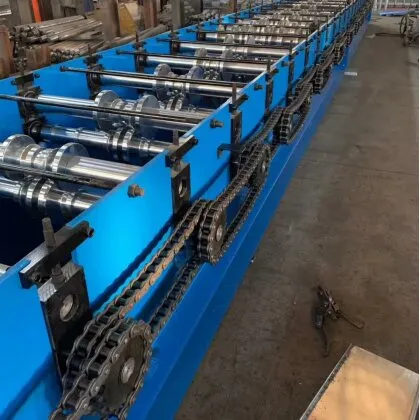
Where it shines
High-rise floors, mezzanines, parking podiums, and industrial roofs. In composite slabs (per Eurocode 4/ACI), the deck works as a stay-in-place form and tensile reinforcement. Typical spans are around 1.5–3.0 m depending on profile geometry, concrete strength, and shoring plan—ask your engineer; site conditions matter.
Advantages you feel on site: consistent geometry (stud welding fits better), faster pours, and less crane time. The floor deck roll forming machine also gives predictable yield, which planners love when bidding big square meters.
Quick vendor snapshot (field notes)
| Vendor | Stations | Speed | Roll steel | Lead time | Notes |
|---|---|---|---|---|---|
| Yowin | 25 | 0–20 m/min | 40Cr, hard chrome | ≈ 60–80 days | Solid after-sales; easy handwheel guiding |
| Vendor A | 22–24 | ≈ 18 m/min | 42CrMo | ≈ 90 days | Good for heavy gauges; higher price |
| Vendor B | 20–22 | ≈ 15 m/min | 45# steel | ≈ 70–100 days | Budget option; watch tolerances |
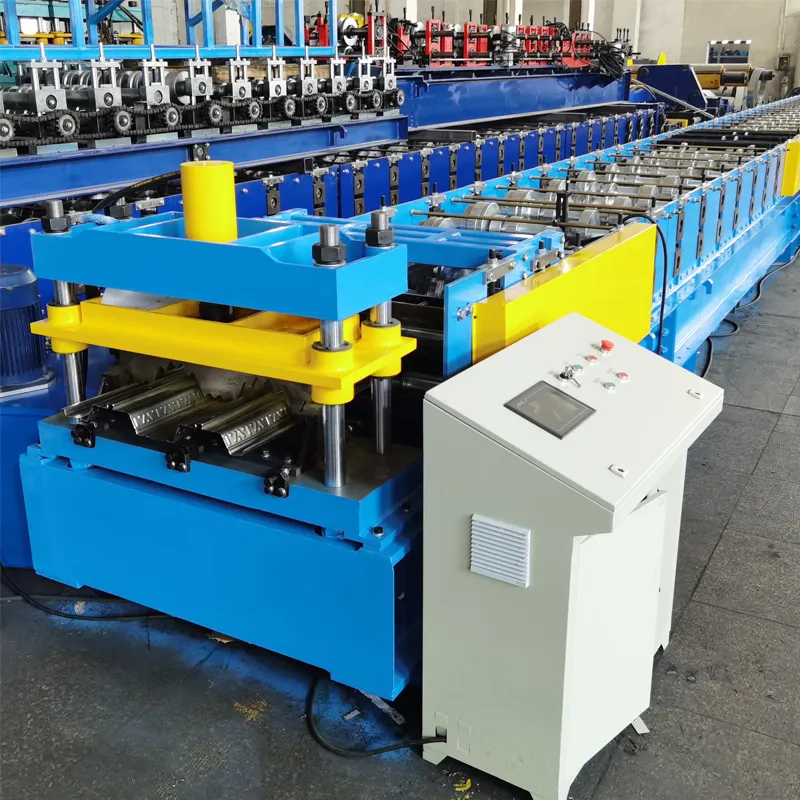
Customization and real projects
You can tune crest height, web width, emboss pattern, logo embossing, and even add quick-change cassettes. Power/voltage? 380V/50Hz is standard in Asia; 480V/60Hz for North America isn’t a problem. Some teams ask for laser length verification and inline oiling—both worthwhile if you care about tight edges and stack neatness.
Case notes: a UAE fabricator ran the floor deck roll forming machine for ≈ 50,000 m²/year; after switching to Cr12MoV shear and recalibrating guides, burr height dropped below ~0.2 mm. A Mexico plant integrated a coil car and trimmed changeover to ≈ 35 minutes—surprisingly, the biggest gain came from standardizing shims, not the hardware.
Final thought: if your schedule is tight and tolerances matter, a dialed-in floor deck roll forming machine is less a purchase and more a production partner. Ask for real test sheets, not just brochures—dimension maps, hardness logs, and a video of a 30-minute cold start to first good part.
Authoritative references
- ASTM A653/A653M – Standard Specification for Steel Sheet, Zinc-Coated (Galvanized). https://www.astm.org/a0653_a0653m-20.html
- ISO 6508-1: Rockwell hardness test. https://www.iso.org/standard/69169.html
- ISO 6892-1: Metallic materials — Tensile testing. https://www.iso.org/standard/89461.html
- ISO 9001: Quality management systems. https://www.iso.org/iso-9001-quality-management.html