
High-Quality PVC Profile Extrusion Machines & Lines
Mastering PVC Profile Extrusion: An Advanced B2B Perspective
In the highly competitive landscape of modern manufacturing, precision and efficiency are paramount. PVC profile extrusion represents a cornerstone technology, enabling the production of a vast array of plastic components critical for diverse industrial applications. From robust building materials to intricate automotive parts, PVC profiles offer an unparalleled combination of durability, lightweight properties, and cost-effectiveness. This detailed exploration is designed for B2B decision-makers, engineers, and procurement specialists seeking a deeper understanding of advanced PVC extrusion processes, its market trends, and its strategic advantages.
This document delves into the core mechanics, technological advancements, and broad applications of PVC profile extrusion, offering insights into optimizing operational efficiency and material utilization. We will cover critical aspects from process flow and technical specifications to vendor comparisons and customized solutions, ensuring a comprehensive outlook on this essential manufacturing domain.
Industry Trends in PVC Profile Extrusion
The global market for pvc profile extrusion is continuously evolving, driven by several key trends. Automation and digitalization are transforming production lines, leading to greater precision, reduced labor costs, and enhanced quality control. Industry 4.0 principles, including IoT integration and predictive maintenance, are becoming standard, allowing for real-time monitoring and optimization of the entire manufacturing process.
Sustainability is another dominant factor. Manufacturers are increasingly focused on using recycled PVC content and developing lead-free, cadmium-free formulations to meet stricter environmental regulations and consumer demand for eco-friendly products. Innovations in material compounding, such as advanced stabilizers and impact modifiers, are enhancing the performance characteristics of profiles, extending service life, and improving aesthetic appeal. The integration of co-extrusion technologies for multi-layered profiles, offering enhanced properties like UV resistance or improved insulation, is also gaining significant traction, particularly in the pvc sheet production line and window profile sectors.
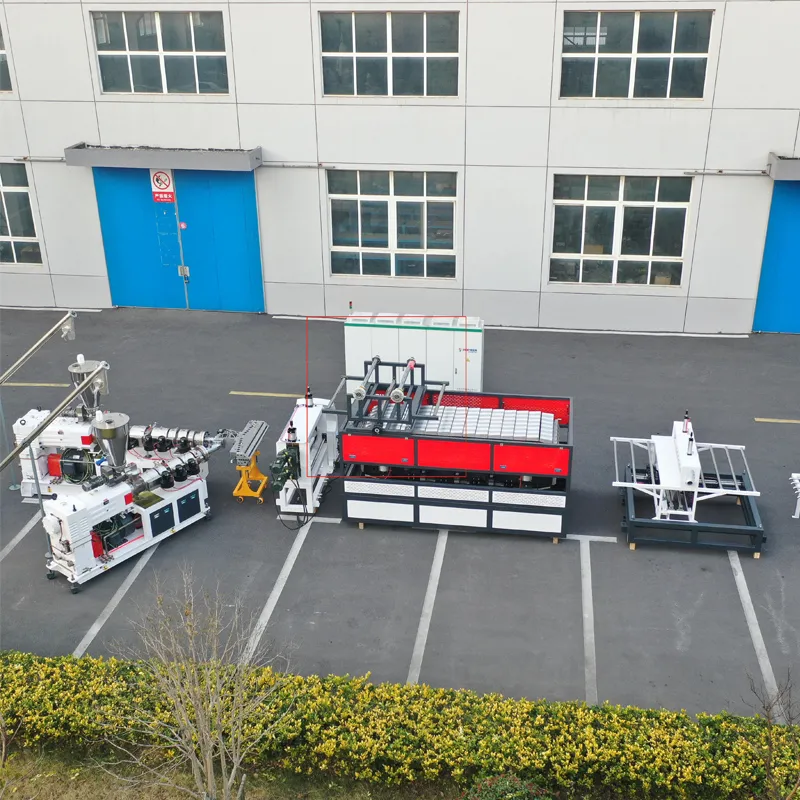
Furthermore, there's a growing demand for customized solutions, requiring flexible production lines capable of quickly adapting to diverse profile designs and specifications. This agility is crucial for sectors like construction and automotive, where bespoke components are frequently requested. The shift towards larger and more complex profiles also necessitates robust pvc profile extrusion line equipment with higher throughput and improved cooling capabilities.
Detailed Process Flow of PVC Profile Extrusion
The manufacturing process of a pvc profile extrusion line is a meticulously controlled sequence of operations designed to transform raw PVC resin into finished profiles. Understanding each step is crucial for optimizing output and ensuring product quality.
Key Stages:
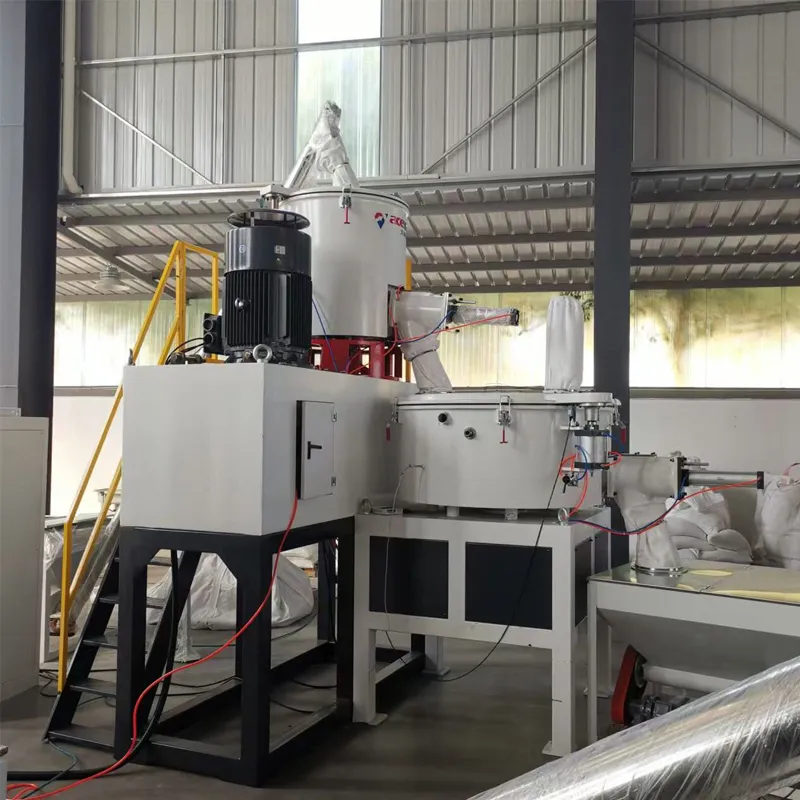
- 1. Material Compounding: This initial phase involves mixing PVC resin (typically suspension or emulsion PVC) with various additives: heat stabilizers (e.g., calcium-zinc systems to prevent degradation), lubricants (internal and external for processing ease), impact modifiers (e.g., CPE, ACR to enhance toughness), fillers (e.g., calcium carbonate to reduce cost and improve stiffness), processing aids, pigments, and UV absorbers. This mixture, known as the dry blend, is typically prepared in a high-speed mixer to ensure homogeneous dispersion and often densified into granules.
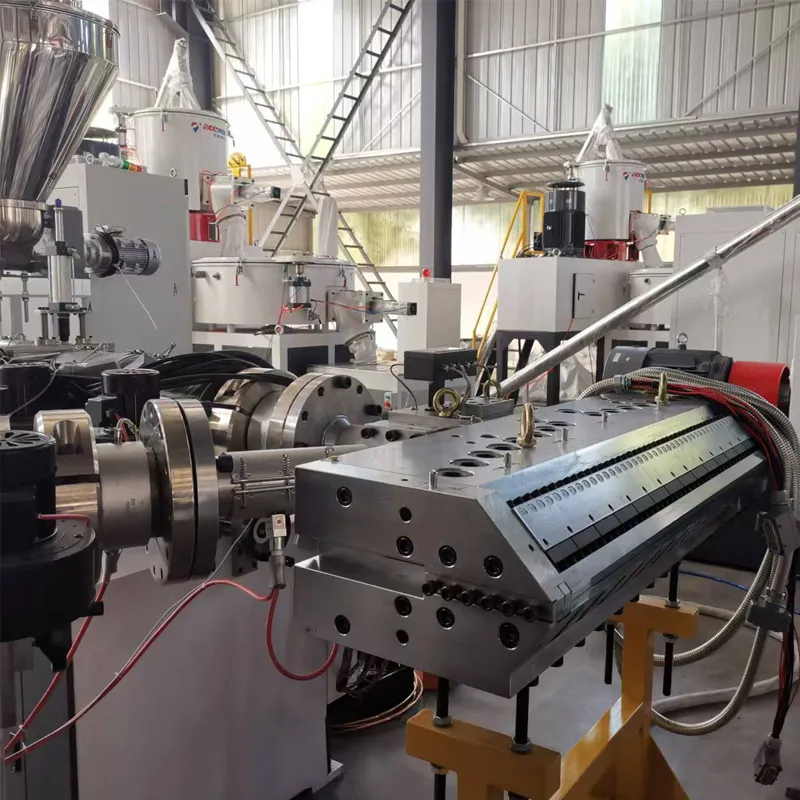
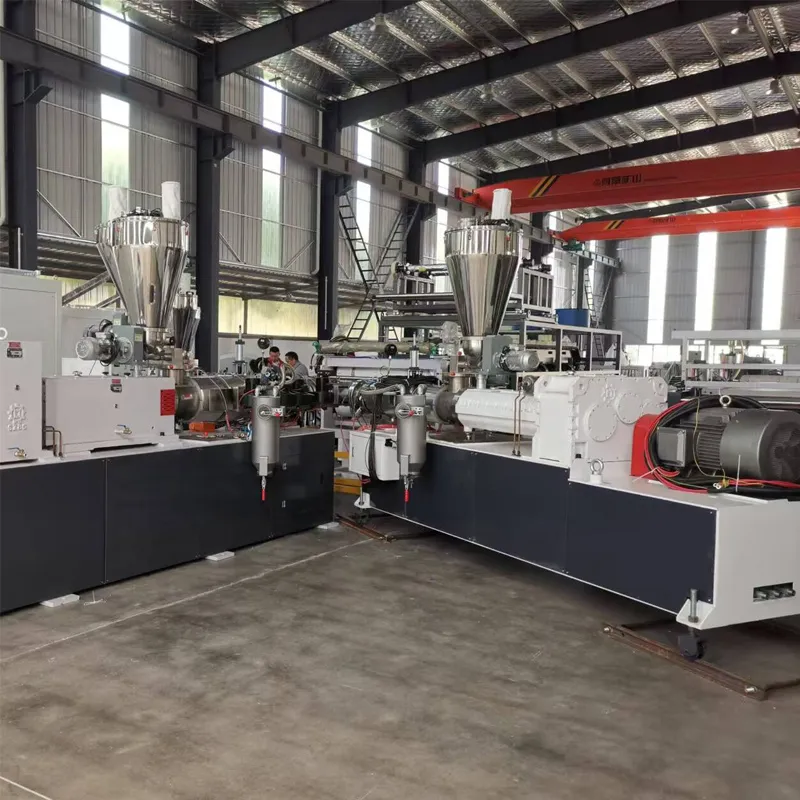
- 2. Extrusion: The dry blend is fed into a twin-screw extruder (either conical or parallel counter-rotating, chosen for PVC's shear-sensitive nature). Inside the heated barrel, the material melts under controlled temperature and pressure, transitioning from solid to a viscous melt. The screws ensure thorough mixing, de-gassing (to remove volatile components), and homogenization of the melt.
- 3. Die Forming: The molten PVC is then forced through a precisely engineered die, which gives the profile its final cross-sectional shape. Die design is critical for achieving dimensional accuracy, smooth surfaces, and uniform wall thickness. Co-extrusion dies can combine multiple PVC layers or different materials for enhanced properties.
- 4. Cooling and Calibration: Immediately after exiting the die, the hot, pliable profile enters the vacuum calibration tank. Here, water-cooled calibrators and vacuum pressure consolidate the profile's shape and dimensions, preventing distortion and ensuring precise sizing. This rapid cooling solidifies the PVC.
- 5. Haul-off: A haul-off unit, typically consisting of multiple tracks or belts, continuously pulls the solidified profile at a consistent speed. This speed is synchronized with the extruder output to maintain uniform wall thickness and prevent stretching.
- 6. Cutting: A precision cutting saw, often operating in sync with the haul-off speed (fly-saw), cuts the continuous profile into desired lengths. This step can include online punching or notching operations.
- 7. Stacking and Packaging: The cut profiles are then automatically or manually stacked, inspected for quality, and prepared for packaging and shipment.
Testing Standards: Throughout this process, quality control adheres to international standards such as ISO 9001 for quality management, and product-specific standards like ASTM D4216 (for rigid PVC building products) and EN 12608 (for unplasticized PVC profiles for the fabrication of windows and doors). These ensure the profiles meet specific mechanical, thermal, and chemical resistance requirements, guaranteeing a typical service life exceeding 20-30 years in target industries like construction and infrastructure. Advantages in typical application scenarios include significant energy saving in insulated window systems and superior corrosion resistance in chemical processing or water supply & drainage systems.
Technical Specifications of a Modern PVC Profile Extrusion Line
A state-of-the-art pvc profile extrusion line is engineered for high performance, reliability, and energy efficiency. Key technical parameters define the capability and suitability of the equipment for specific production demands. Below is a representative table of specifications for a high-capacity pvc profile extrusion machine.
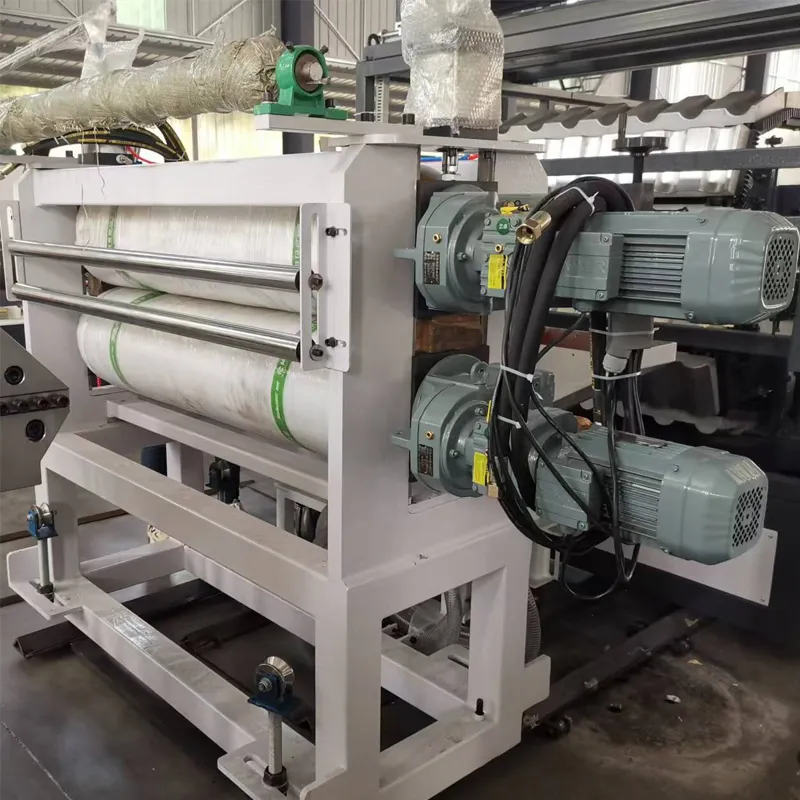
These specifications highlight the robust engineering and advanced control systems integrated into modern extrusion lines, ensuring optimal performance and product consistency. When evaluating a pvc sheet extrusion machine or profile line, factors like energy consumption per kg of output and the adaptability of the die head system for various profiles are critical for long-term operational efficiency.
Application Scenarios and Technical Advantages
The versatility of pvc profile extrusion enables its widespread application across numerous industries, each benefiting from its distinct technical advantages.
Key Application Sectors:
- Construction: PVC profiles are indispensable for window and door frames, wall panels, siding, decking, fencing, and conduit pipes. Their excellent weatherability, thermal insulation properties, and resistance to rot and pests provide significant long-term benefits compared to traditional materials.
- Automotive: Used for interior trim, sealants, weather stripping, and cable conduits. PVC's flexibility, sound dampening, and resistance to oils and fuels make it ideal for these demanding applications.
- Electrical & Electronics: Cable trunking, conduit, and insulation profiles benefit from PVC's excellent electrical insulation properties and flame retardancy.
- Furniture & Interior Design: Edge banding, decorative profiles, and components for office furniture leverage PVC's aesthetic versatility and durability.
- Consumer Goods: Appliance components, garden tools, and various household items benefit from PVC's moldability and economic advantages.
Technical Advantages:
- Corrosion Resistance: PVC profiles are highly resistant to acids, alkalis, salts, and other corrosive chemicals, making them suitable for petrochemical and industrial environments.
- Weatherability: Formulated with UV stabilizers, PVC profiles maintain their color and mechanical properties even under prolonged exposure to sunlight and harsh weather conditions.
- Energy Efficiency: Multi-chamber PVC window and door profiles significantly reduce heat transfer, contributing to substantial energy savings in buildings.
- Durability & Low Maintenance: PVC profiles are inherently robust, do not rot, rust, or corrode, and require minimal upkeep, reducing lifecycle costs.
- Lightweight: Compared to metal or wood alternatives, PVC profiles are lighter, facilitating easier installation and reducing structural load.
- Design Flexibility: Extrusion allows for the creation of complex cross-sections and intricate designs, offering unparalleled design freedom for engineers.
Vendor Comparison and Customized Solutions
Selecting the right partner for a pvc profile extrusion line is a strategic decision that impacts long-term operational success. Vendors vary significantly in their technological offerings, support, and customization capabilities. A thorough comparison based on critical factors is essential.
Customized Solutions: A significant advantage for modern businesses is the ability to procure a pvc profile extrusion line that is tailored to their unique production needs. Customization can involve:
- Die Design and Fabrication: Developing bespoke dies for highly specialized profile geometries, including multi-lumen or intricate decorative elements.
- Material Handling Systems: Integrating automated raw material dosing, mixing, and feeding systems tailored to specific formulations and capacities.
- Co-Extrusion Capabilities: Designing lines for multi-layer profiles, such as those with UV-resistant caps or different color combinations, which extends the functionality and market appeal.
- Downstream Equipment: Customizing haul-off units, cutting saws, embossing units, online printing, or punching machines to integrate seamlessly with specific profile finishing requirements.
- Control System Integration: Developing specialized PLC programs and HMI interfaces for complex production sequences or integration with existing factory management systems.
Leading manufacturers often boast decades of experience and a portfolio of partner clients, including major players in petrochemical and metallurgy industries, underscoring their authoritativeness. Their expertise in adhering to stringent quality benchmarks (e.g., ISO, ANSI) and providing comprehensive test data ensures client trust.
Application Case Studies in PVC Profile Extrusion
Real-world applications demonstrate the tangible benefits and technical prowess achievable through advanced pvc profile extrusion technologies.
Case Study 1: High-Volume Window & Door Profile Production
- Challenge: A major European window manufacturer needed to increase production capacity for multi-chamber PVC window profiles by 30% while improving energy efficiency and maintaining stringent aesthetic standards.
- Solution: Implementation of a new generation pvc profile extrusion line featuring parallel twin-screw extruders, advanced vacuum calibration systems, and integrated co-extrusion for external weather-resistant layers. The line included a sophisticated PLC control system for precise temperature and speed synchronization.
- Outcome: The client achieved a 35% increase in throughput (from 600 kg/h to 810 kg/h per line) and a 15% reduction in specific energy consumption. The improved cooling calibration minimized profile warpage, leading to a significant reduction in waste material and better dimensional stability, exceeding EN 12608 standards. Customer feedback highlighted the enhanced surface finish and consistent quality.
Case Study 2: Specialized Automotive Sealing Profiles
- Challenge: An automotive supplier required highly flexible, yet durable PVC sealing profiles with integrated fabric flocking for vehicle interiors, demanding high abrasion resistance and specific tactile properties.
- Solution: A custom-designed extrusion line utilizing a compact conical twin-screw extruder for the main PVC profile and a smaller single-screw extruder for a soft PVC co-extrusion layer. A specialized downstream unit integrated a flocking application immediately after the profile exits the die, followed by precise infrared curing and cutting.
- Outcome: The bespoke line produced profiles meeting tight automotive specifications (e.g., ISO 37 for tensile strength, SAE J1885 for interior trim), achieving consistent flock adhesion and profile flexibility. The integrated process significantly reduced post-processing labor and improved material yield. This solution underscored the capacity for customized solutions to meet niche, high-performance demands.
Ensuring Trustworthiness: FAQ, Lead Time, Warranty & Support
Establishing strong B2B partnerships relies on transparency and robust support infrastructure. Here’s what clients can expect when investing in pvc profile extrusion machine technology.
Frequently Asked Questions (FAQ):
Q: What raw materials are compatible with these extrusion lines?
A: Our lines are primarily designed for rigid and soft PVC compounds. They can process various formulations including virgin, recycled, and co-extruded materials with appropriate additives (stabilizers, lubricants, fillers, impact modifiers, pigments).
Q: How customizable are the extrusion dies?
A: Extrusion dies are highly customizable. Our engineering team works closely with clients to design and manufacture dies for virtually any profile geometry, ensuring precision and optimal melt flow for specific application requirements.
Q: What are the typical energy consumption rates?
A: Modern lines are engineered for energy efficiency. Our systems typically operate at a specific energy consumption rate of 0.2 kWh to 0.3 kWh per kilogram of PVC processed, depending on the profile size and complexity. Variable frequency drives (VFDs) and optimized heating zones contribute to significant energy savings.
Q: What kind of quality control is integrated into the line?
A: Our lines feature integrated PLC control systems with real-time parameter monitoring (temperature, pressure, speed). Optional in-line measurement systems for profile dimensions and surface quality can be integrated to ensure continuous adherence to specified tolerances (e.g., ISO, ASTM, DIN).
Lead Time & Fulfillment:
Standard pvc sheet extrusion machine or profile extrusion lines typically have a lead time of 60-90 days from order confirmation to shipment, depending on the level of customization. Complex, highly customized lines may require 120 days or more. We maintain transparent communication throughout the manufacturing and assembly process, providing regular updates to ensure timely delivery and efficient project management.
Warranty Commitments:
All our PVC extrusion lines come with a standard 12-month warranty on mechanical and electrical components, effective from the date of commissioning or 18 months from shipment, whichever comes first. This warranty covers manufacturing defects and ensures peace of mind for our clients. Extended warranty options are available upon request.
Customer Support:
Our commitment extends beyond delivery. We offer comprehensive after-sales support, including:
- Installation & Commissioning: On-site technical assistance by experienced engineers.
- Operator Training: Thorough training programs for client personnel to ensure proficient operation and maintenance.
- Technical Assistance: 24/7 remote technical support via phone, email, or video conferencing.
- Spare Parts Supply: A readily available inventory of critical spare parts to minimize downtime.
- Preventive Maintenance: Scheduled maintenance services to ensure optimal performance and extend the life of your equipment.
Conclusion
The continuous evolution of pvc profile extrusion technology underscores its vital role in modern industrial manufacturing. From enhancing construction efficiency to enabling specialized automotive components, the advantages of precision-engineered PVC profiles are undeniable. By understanding the intricate process flow, leveraging advanced technical specifications, and partnering with authoritative vendors, businesses can optimize their production capabilities, reduce operational costs, and meet the growing demand for high-performance, sustainable plastic solutions. Investing in cutting-edge extrusion technology is not merely a purchase but a strategic commitment to future-proof manufacturing.
References
- Plastics Technology. "Extrusion Handbook: A Comprehensive Guide to Plastics Extrusion." Gardner Business Media.
- European Council of Vinyl Manufacturers (ECVM). "PVC and Sustainability: A Review."
- ASTM International. "Standard Specification for Rigid Poly(Vinyl Chloride) (PVC) Compounds and Chlorinated Poly(Vinyl Chloride) (CPVC) Compounds." ASTM D4216.
- ISO (International Organization for Standardization). "Quality Management Systems – Requirements." ISO 9001.
- Klohn, V. & Osswald, T.A. (2018). "Extrusion: The Definitive Guide for the Plastics Industry." Hanser Publications.