
Need a Grain Silo Roll Forming Machine for Speed & Accuracy?
What I’m Seeing in the Silo Panel Shop: Notes on a Modern Grain Silo Roll Form Line
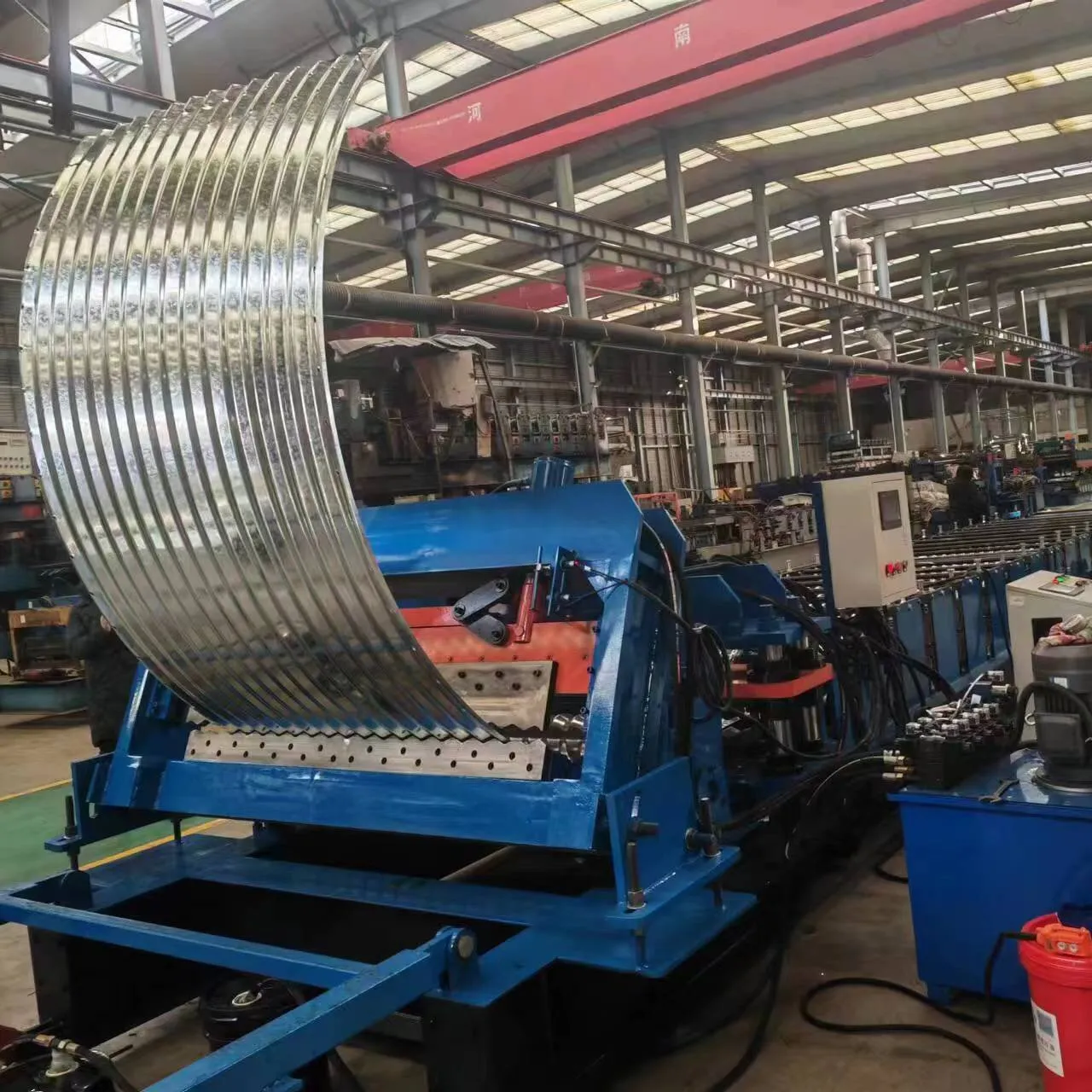
If you’ve ever watched a grain silo roll forming machine run at full tilt, you know it’s oddly mesmerizing—the coil unwinds, the steel hums through stations, and perfect corrugations appear like clockwork. This particular line, built in Shijiazhuang, is designed for consistently tough outdoor duty, and—speaking candidly—many customers say that reliability matters more than anything when the harvest window gets tight.
Industry snapshot
Global demand for steel silos is still rising—feed mills, seed processors, grain terminals, even brewers (malt storage) are scaling capacity. The shift is toward higher-strength coated steels, faster tool-less changeovers, integrated punching, and data logging for QA. In fact, more buyers now ask for remote diagnostics and CE/ISO documentation up front.
What the line actually includes
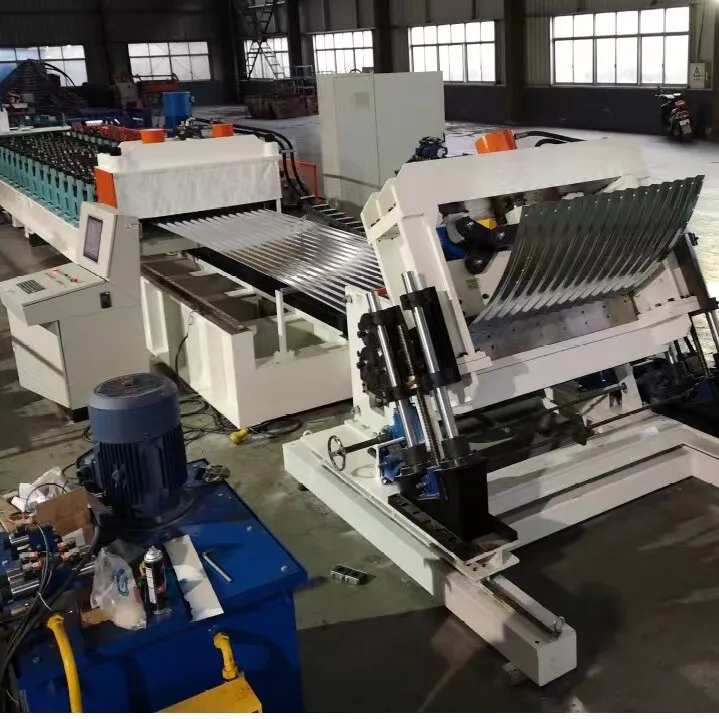
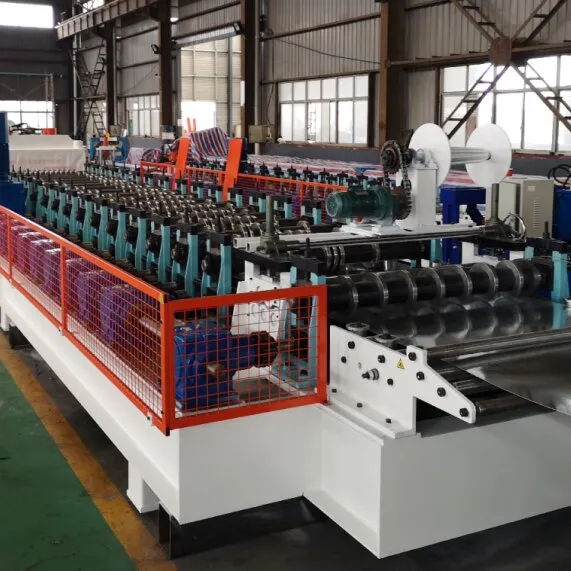
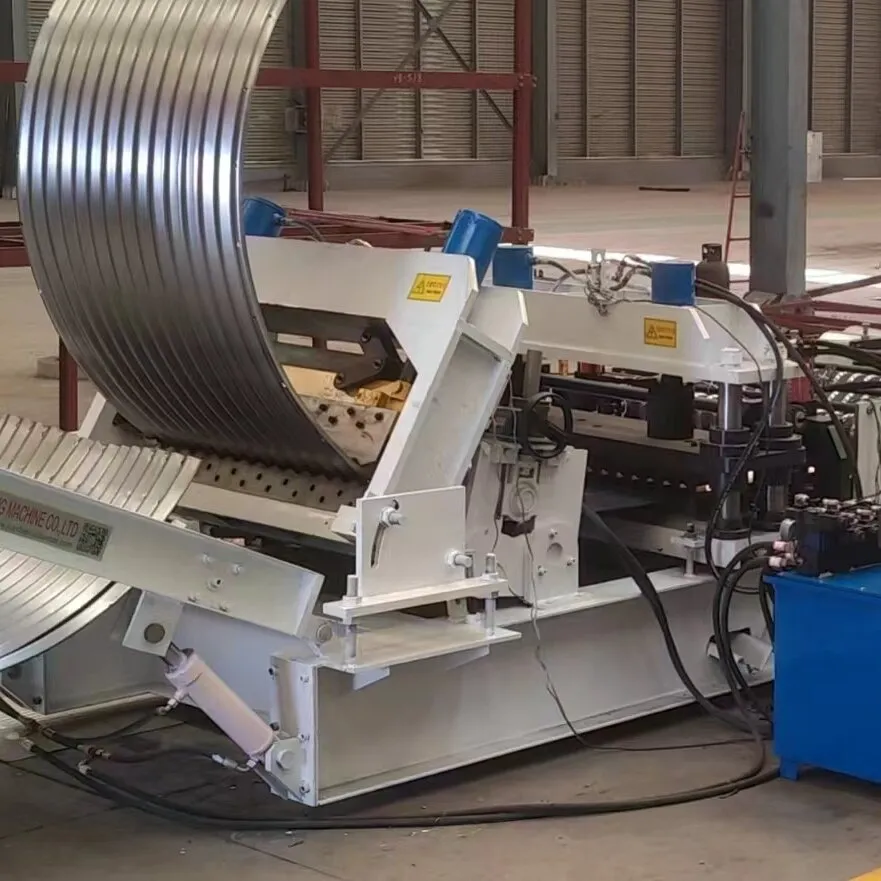
Typical flow: decoiler → leveller → servo-punching (rivet/bolt, ventilation, manhole patterns) → roll forming (corrugation profile) → curving unit (to match silo diameter) → hydraulic cut-to-length → stacker. Materials mostly galvanized or Alu-Zinc coils conforming to ASTM A653/A792 with Z275–Z350 coatings, yield ≈ 300–420 MPa.
Key specifications (typical)
| Parameter | Spec (≈ real-world) |
|---|---|
| Material | Galvanized/Alu-Zinc steel coil, ASTM A653/A792, Z275–Z350 |
| Thickness range | Panel 0.8–1.5 mm; stiffener up to 4.0 mm (with heavy-duty cassette) |
| Line speed | 10–20 m/min (profile, punching density, and coil quality dependent) |
| Stations | 16–24 forming stations; induction-hardened rollers (≈ HRC 58–62) |
| Accuracy | Profile ±0.5 mm; cut length ±1.0 mm/10 m |
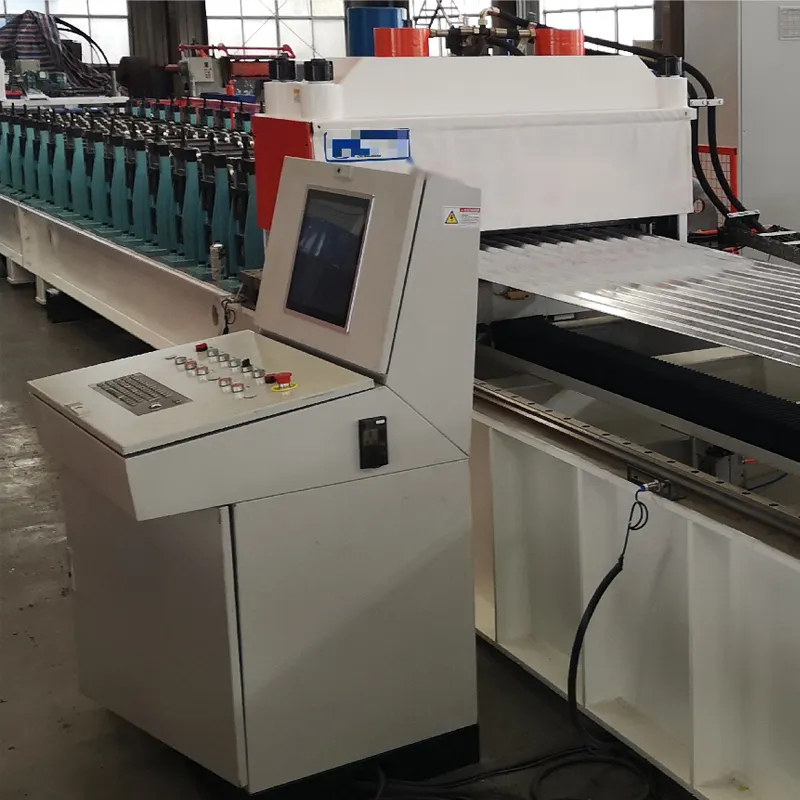
| Control | PLC (Siemens/Delta), HMI touch panel, encoder feedback |
Why buyers pick this grain silo roll forming machine
- Consistent corrugation and hole alignment → faster onsite assembly, fewer leaks.
- Servo-punch + curve in-line → less WIP, tighter takt times.
- Roller steel and heat treatment extend service life (rollers often 8–10 years; line 15+ with maintenance).
- Electrical safety per EN/IEC 60204-1 and guarding to ISO 14120, CE-ready.
Testing and QA
Panel coating verified via zinc weight checks; appearance and burr limits per internal QA. Salt-spray references often align with ASTM B117 (coating supplier data). Electrical checks for continuity/grounding, and trial runs log cut-length Cp/Cpk before FAT. Real-world tolerance can drift with coil flatness—worth noting.
Applications
Grain terminals, farm silos, seed storage, feed mills, malt houses, plus bolt-together industrial bins. In coastal climates, many clients move to AZ150 coatings; inland, Z275 is still common.
Customization options
Profile pitch/depth, hole patterns, emboss logos, offline beading, quick-change cassettes, auto stacking, remote support, and tailored HMI languages. Origin: Room 5019, Beichen Square, No.19 Shifang Road, Chang'an District, Shijiazhuang, China.
Vendor comparison (quick take)
| Vendor | Certs | Roller Material | Lead Time | After-sales |
|---|---|---|---|---|
| Yowin Machine | ISO 9001, CE (Machinery Directive) | Cr12MoV, HRC 58–62 | ≈ 45–75 days | Remote + on-site commissioning |
| EU Supplier A | CE, ISO 9001 | D2/1.2379 | ≈ 90–120 days | On-site + spare parts hub |
| Local Builder B | Factory QC only | 45# steel, surface hardened | ≈ 30–60 days | Phone support; limited spares |
Field notes and feedback
A Central European feed mill upgraded to a grain silo roll forming machine with inline curving; installation time on-site dropped ≈ 18% and punch-hole rework fell below 0.8%. Another co-op reported that switching to AZ150 coils extended panel life in coastal storage by several seasons—unsurprising, but still nice to see in the data.
Compliance and standards worth checking
ISO 9001 for QMS, EU Machinery Directive 2006/42/EC for CE, EN/IEC 60204-1 for electrical safety, and material specs per ASTM A653/A792. For storage hygiene, operators often reference FAO grain storage guidelines.
References:
- ISO 9001:2015 Quality Management Systems.
- EU Machinery Directive 2006/42/EC.
- ASTM A653/A653M – Standard Specification for Steel Sheet, Zinc-Coated (Galvanized).
- FAO: Grain Storage Techniques—Evolution and Trends.
- EN/IEC 60204-1: Safety of machinery—Electrical equipment of machines.