
Floor Deck Roll Forming Machine | High-Speed, Accurate & Durable
Understanding the floor deck roll forming machine and Its Industrial Significance
The construction industry continually seeks innovative solutions to enhance efficiency, structural integrity, and cost-effectiveness. Central to these advancements is the floor deck roll forming machine, a sophisticated piece of industrial equipment designed for the continuous production of galvanized steel floor deck panels. These panels are critical components in modern composite flooring systems, providing both formwork during concrete pouring and positive reinforcement after the concrete cures. This article delves into the intricate mechanisms, technical advantages, application versatility, and strategic considerations for deploying a high-performance floor deck machine in contemporary B2B operations.
The precise engineering and robust construction of a deck floor roll forming machine ensure that architectural and structural specifications are met with unparalleled accuracy. Manufacturers leverage these machines to produce various floor deck profiles, each optimized for specific load-bearing requirements and spanning capabilities. Understanding the comprehensive lifecycle, from raw material to finished product, is paramount for stakeholders involved in large-scale construction, infrastructure development, and industrial facility projects.
Detailed Process Flow of a Floor Deck Roll Forming Machine
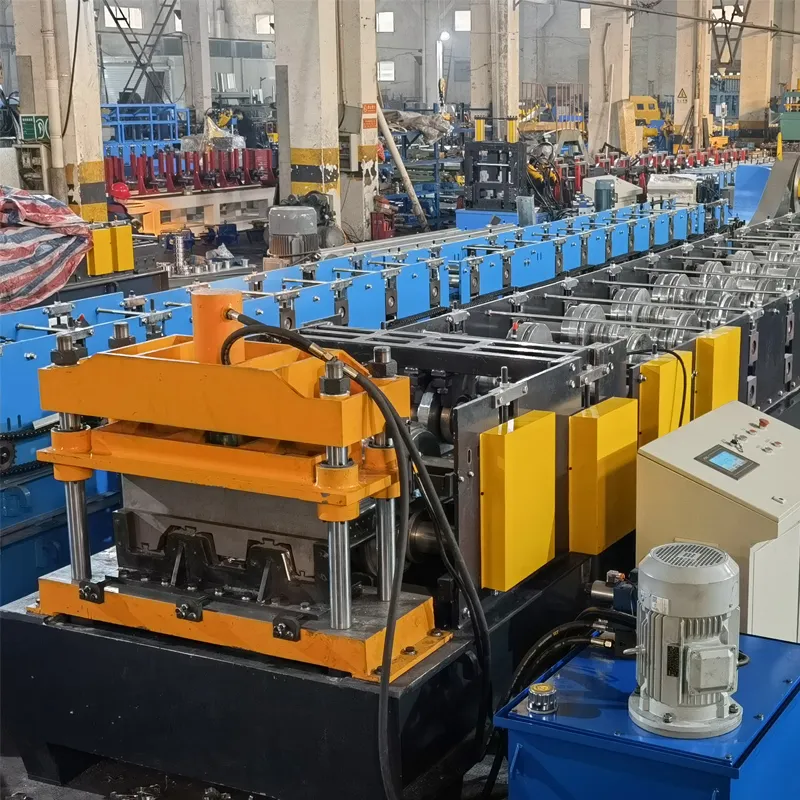
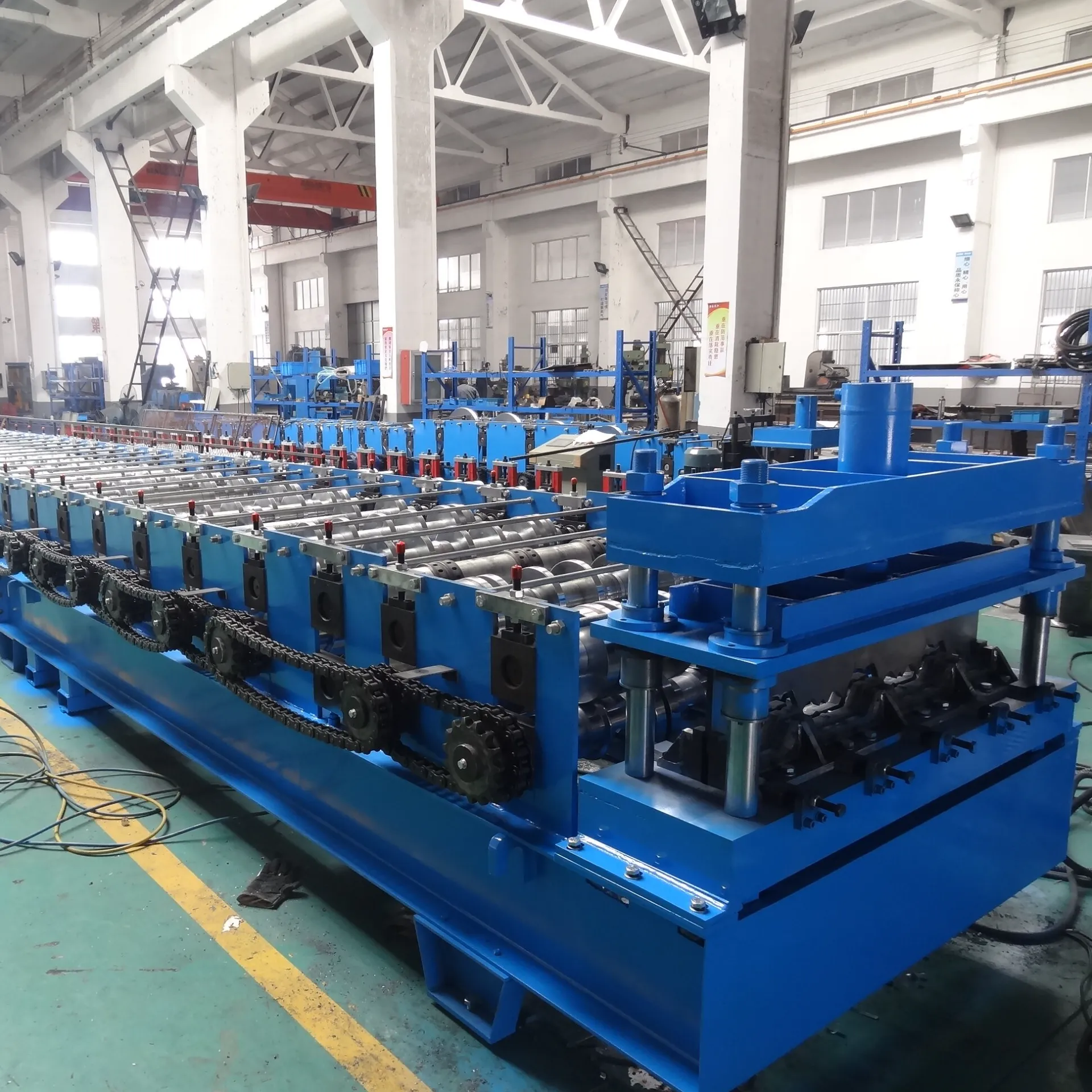
The production of floor deck panels involves a precise, multi-stage cold roll forming process, ensuring uniform quality and high structural performance. The core components of the steel deck roll forming machine, including the uncoiler, guiding system, main roll forming unit, cutting device, and stacking unit, are meticulously engineered to deliver consistent output. Here is a detailed breakdown:
- Decoiling: The process begins with loading a coil of raw material, typically galvanized steel, onto a hydraulic or manual uncoiler. The uncoiler precisely feeds the steel strip into the machine, maintaining optimal tension and preventing material damage. The steel coils are typically ASTM A653 commercial quality or structural steel, ranging in thickness from 0.7mm to 1.6mm, ensuring the final product meets specified load-bearing capacities and corrosion resistance requirements.
- Entry Guiding: As the steel strip unwinds, it passes through an entry guiding system. This system ensures the strip is perfectly aligned and centered before entering the roll forming section, preventing uneven forming or material wastage. Precision-engineered rollers and side guides, often fabricated from hardened steel through CNC machining and heat treatment, maintain this critical alignment.
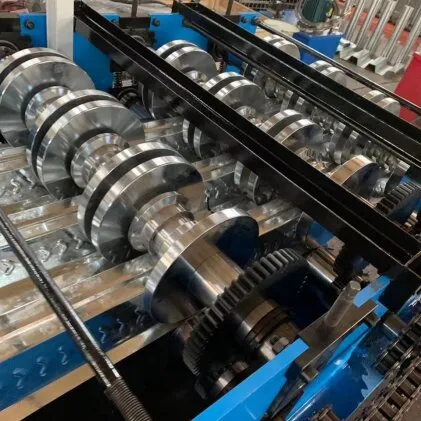
- Main Roll Forming: This is the core of the operation. The steel strip progressively passes through a series of precision-engineered rollers, each designed to incrementally shape the material into the desired floor deck profile. The rollers themselves are typically forged from high-grade alloy steel (e.g., Cr12, Cr12MoV), meticulously shaped via CNC machining, and then surface-hardened through quenching to achieve high wear resistance (HRC 58-62). This ensures a long service life of the machine, often exceeding 15-20 years with proper maintenance. The gradual forming process minimizes stress on the material, ensuring the structural integrity and dimensional accuracy of the final floor deck.
- Cutting to Length: Once the desired profile is formed, a hydraulic or electric cutting device precisely cuts the continuous strip into pre-programmed lengths. The cutting blades, often made of Cr12MoV steel, are designed for clean, burr-free cuts, maintaining dimensional consistency. The cutting mechanism is synchronized with the line speed, often controlled by a high-precision encoder and PLC (Programmable Logic Controller) system.
- Run-out and Stacking: The cut panels are then transported via a run-out table to an automatic stacking unit. This unit neatly stacks the finished floor deck panels, preparing them for packaging and transportation. Automation in this stage significantly reduces labor costs and increases overall production efficiency.
Testing standards for these machines typically adhere to ISO 9001 for quality management systems, and the resulting steel floor decks comply with international material specifications such as ASTM A653/A653M for coated steel sheet and AS/NZS 1397 for sheet and strip steel. The target industries benefiting from this precise manufacturing include large-scale commercial buildings, industrial facilities, multi-story residential complexes, and infrastructure projects where energy-saving construction methods and corrosion resistance are paramount.
Industry Trends and Market Dynamics in Floor Deck Production
The global construction market is experiencing consistent growth, driven by urbanization, infrastructure development, and increasing demand for sustainable and resilient buildings. This trajectory directly impacts the demand for efficient and high-quality steel decking solutions produced by a decking machine.
- Automation and Smart Manufacturing: There's a pronounced shift towards fully automated and integrated roll forming lines. Advanced PLC controls, HMI touch screens, and even IoT integration allow for remote monitoring, predictive maintenance, and seamless data exchange, optimizing production flows and reducing manual intervention. This trend directly improves the output and reliability of a floor deck roll forming machine.
- Demand for Lighter and Stronger Structures: Modern architectural designs often call for lighter floor systems without compromising strength. This necessitates advanced deck profiles that offer superior strength-to-weight ratios, driving innovations in roll former design and material usage.
- Sustainability and Material Efficiency: Manufacturers are increasingly focusing on minimizing waste and optimizing material usage. Precision roll forming, coupled with efficient cutting systems, plays a crucial role in achieving these sustainability goals. The use of recycled steel and energy-efficient machine components also contributes to a greener construction footprint.
- Customization and Flexibility: The market increasingly demands machines capable of producing multiple floor deck profiles with quick changeover times. This flexibility allows manufacturers to adapt to diverse project requirements without significant downtime or investment in multiple machines.
According to recent industry reports, the global construction market is projected to grow at a CAGR of 6-8% in the coming years, with steel construction maintaining a significant share. This sustained growth underpins the robust demand for efficient and reliable floor deck roll forming machine technology.
Technical Specifications and Expertise
The performance and reliability of a floor deck roll forming machine are defined by its technical specifications and the quality of its components. Expertise in understanding these parameters is crucial for selecting the right equipment for specific production requirements. Key technical parameters include material compatibility, forming speed, roller station count, motor power, and control system sophistication.
Typical Floor Deck Roll Forming Machine Specifications
| Parameter | Specification | Units/Notes |
|---|---|---|
| Material Thickness | 0.7 – 1.6 | mm (Galvanized Steel, PPGI) |
| Forming Speed | 12 – 20 | m/min (adjustable) |
| Roller Stations | 22 – 28 | Sets (depending on profile complexity) |
| Main Motor Power | 11 – 18.5 | kW |
| Hydraulic Power | 5.5 – 7.5 | kW (for cutting) |
| Control System | PLC with HMI | Siemens/Mitsubishi/Delta options |
| Shaft Diameter | Φ75 – Φ95 | mm (solid 45# steel) |
| Cutting Tolerance | ±2 | mm |
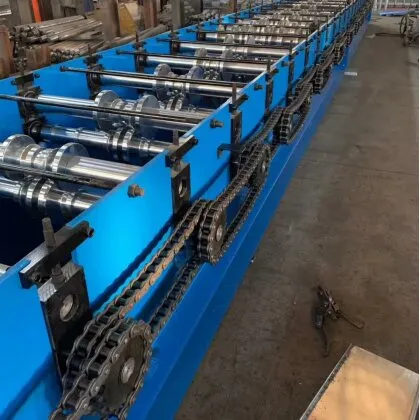
The quality of these components directly influences the longevity and precision of the machine. Rollers, for instance, are manufactured from high-grade bearing steel and undergo CNC precision grinding and heat treatment (e.g., induction hardening) to achieve superior hardness and wear resistance. This minimizes deformation and ensures consistent profile accuracy over millions of linear meters of production. The structural frame of the decking machine is typically constructed from robust H-beam or channel steel, precision-welded and stress-relieved to maintain rigidity and stability during high-speed operation. Such meticulous engineering forms the bedrock of a reliable and high-performing floor deck roll forming machine.
Application Scenarios and Practical Experience
The versatility of floor deck panels produced by a floor deck roll forming machine makes them indispensable across a wide spectrum of construction projects. Their application extends beyond mere structural support, offering tangible benefits in various environments.
- High-Rise Commercial Buildings: In skyscraper construction, time is money. Floor deck panels accelerate floor slab construction by providing a robust working platform and permanent formwork. This reduces the need for extensive temporary propping, significantly shortening project timelines and enhancing site safety.
- Industrial Facilities and Warehouses: Large-span industrial buildings benefit from the inherent strength and wide-spanning capabilities of floor decks. They allow for flexible column layouts, optimizing internal space for machinery and logistics. The speed of installation of these panels, often produced by a high-speed deck floor roll forming machine, is crucial for rapid facility deployment.
- Multi-Story Parking Garages: The composite action of steel deck and concrete provides excellent strength and durability for parking structures, which are subjected to heavy dynamic loads. The consistent quality delivered by a modern steel deck roll forming machine ensures long-term performance and minimal maintenance.
- Bridge Construction and Infrastructure Projects: While less common than buildings, specialized floor deck profiles are occasionally used in bridge decks for specific applications, benefiting from their high strength-to-weight ratio and ability to resist environmental stressors when properly coated.
- Renovation and Retrofitting: In existing structures, floor deck panels can be used to add new floor levels or strengthen existing ones without imposing excessive dead loads, offering a lightweight yet strong solution for structural upgrades.
Customer feedback consistently highlights the rapid installation, structural efficiency, and material savings achieved through the use of precisely manufactured floor deck panels. For instance, a major contractor in Southeast Asia reported a 15-20% reduction in slab construction time for a 30-story commercial tower by integrating a high-capacity floor deck machine into their supply chain, demonstrating the tangible experience benefits.
Technical Advantages of Advanced Floor Deck Roll Forming Machines
Modern floor deck roll forming machine designs incorporate several key technical advantages that set them apart, ensuring superior product quality, operational efficiency, and long-term cost savings for B2B enterprises.
- Precision Forming and Dimensional Stability: Utilizing advanced CAD/CAM software for roller design and precision CNC machining for manufacturing ensures that each floor deck profile meets exact dimensional tolerances. This consistency is vital for structural integrity and ease of installation on-site. The progressive forming stages minimize material spring-back and residual stress.
- High-Speed Production Capability: Optimized drive systems, robust gearboxes, and efficient motor configurations enable production speeds of 12-20 meters per minute or more. This high throughput is critical for meeting demanding project schedules and optimizing manufacturing cycles.
- Material Efficiency and Waste Reduction: Precise material feeding, accurate cutting, and optimized roller designs minimize scrap rates. This translates directly into cost savings and contributes to sustainable manufacturing practices, especially with expensive galvanized steel coils.
- Durability and Reliability: Components like rollers, shafts, and cutting dies are fabricated from high-grade alloy steels, undergoing stringent heat treatment processes for enhanced hardness and wear resistance. This robust construction ensures a long operational lifespan and minimal downtime, even under continuous heavy-duty use.
- Advanced Control Systems: Integrated PLC-based control systems (e.g., Siemens, Mitsubishi) with intuitive Human-Machine Interfaces (HMI) provide precise control over forming parameters, cutting lengths, and production batches. These systems often include fault diagnostics and remote access capabilities for enhanced operational control and troubleshooting.
- Energy Efficiency: Modern machines are designed with energy-efficient motors and hydraulic systems, reducing power consumption and operational costs. Features like variable frequency drives (VFDs) optimize motor performance based on load, further contributing to energy savings.
Vendor Comparison: Key Differentiators for a Decking Machine
Selecting a supplier for a floor deck roll forming machine involves a comprehensive evaluation of several critical factors beyond just initial price. A robust vendor comparison considers product quality, technological advancement, after-sales support, customization capabilities, and proven industry reputation.
Comparative Criteria for Roll Forming Machine Suppliers
| Criterion | High-Tier Supplier (e.g., Yowin Machine) | Mid-Tier Supplier | Budget Supplier |
|---|---|---|---|
| Component Quality | Premium (Siemens/Mitsubishi PLC, Cr12MoV rollers, hardened steel) | Standard (Local PLC, 45# steel rollers with plating) | Basic (Generic PLC, untreated steel rollers) |
| Production Precision | Excellent (±2mm cutting, consistent profile geometry) | Good (±3-5mm cutting, minor profile variations) | Acceptable (±5-10mm cutting, noticeable variations) |
| After-Sales Support | Comprehensive (On-site installation, remote support, readily available spares) | Standard (Remote support, limited on-site, common spares) | Minimal (Limited remote, difficult to get spares) |
| Customization Options | Extensive (Profile design, speed, automation level, integrated lines) | Limited (Basic profile adjustments, some speed control) | Very Limited (Standard models only) |
| Certifications/Compliance | CE, ISO 9001, international safety standards | Basic CE/ISO | Few or none |
Leading manufacturers distinguish themselves through a commitment to high-quality raw materials, advanced manufacturing techniques for machine components, and robust quality control throughout the assembly process. This directly translates into a more reliable and efficient floor deck machine with a longer operational lifespan and lower total cost of ownership (TCO). For businesses prioritizing long-term operational excellence and minimizing production risks, investing in a high-tier supplier is a strategic imperative.
Customized Solutions for Floor Deck Production
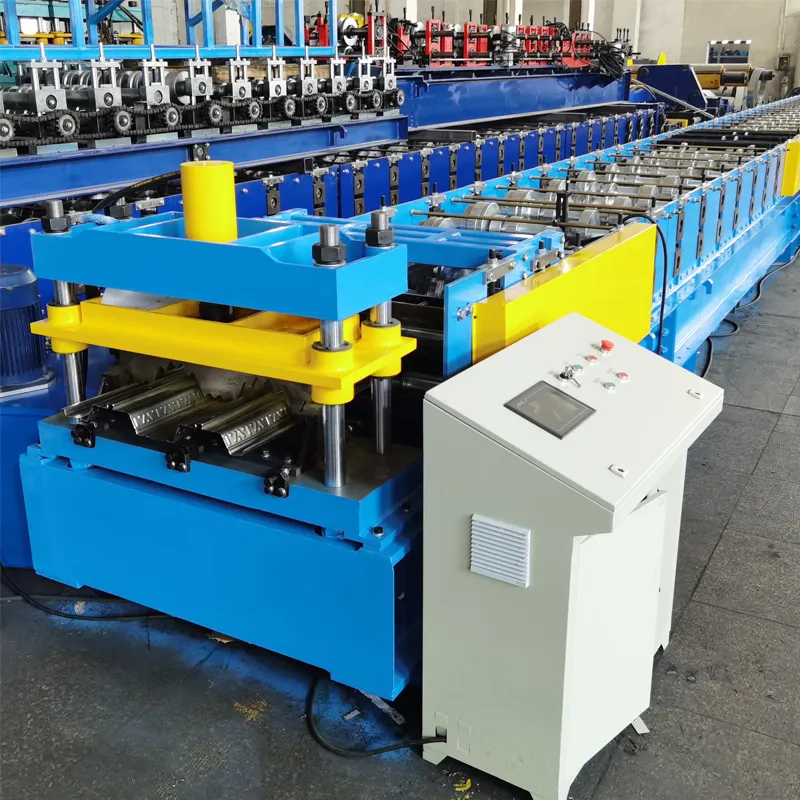
Recognizing that no two construction projects are identical, leading manufacturers of floor deck roll forming machine systems offer extensive customization options. This flexibility ensures that the machine aligns perfectly with specific production needs, target profiles, and operational environments.
- Profile Design and Variation: Clients can request machines capable of producing unique floor deck profiles optimized for specific span lengths, concrete volumes, or architectural aesthetics. This often involves custom roller sets and precise adjustment mechanisms. Some machines are designed for quick changeovers between different standard profiles (e.g., trapezoidal, dovetail), providing greater production versatility.
- Material Handling Adaptations: Customization can extend to handling a wider range of material thicknesses or widths, requiring modifications to the uncoiler, guiding system, and even the structural rigidity of the main machine frame.
- Automation Level Integration: From semi-automatic setups to fully integrated, lights-out production lines with automated material feeding, cutting, stacking, and even packaging, customization allows for scaling the automation level to match labor availability and desired throughput.
- Speed and Capacity Enhancements: For high-volume production requirements, machines can be engineered for higher forming speeds, incorporating more powerful motors and advanced control algorithms to maintain precision at elevated rates.
- Environmental Adaptations: Machines can be specified with components suitable for extreme operating conditions, such as high humidity environments requiring enhanced corrosion protection for exposed parts, or dust-prone areas needing specialized enclosures and filtration.
Working with an experienced engineering team enables businesses to tailor a steel deck roll forming machine that perfectly addresses their unique challenges, whether it's optimizing for specific market demand, integrating into an existing production line, or developing proprietary floor deck solutions.
Application Case Studies: Demonstrating Proven Performance
The tangible benefits of a high-quality floor deck roll forming machine are best illustrated through real-world application case studies, showcasing consistent performance and return on investment.
-
Case Study 1: Major Commercial Complex in Dubai
A prominent construction group acquired a custom-engineered floor deck roll forming machine with a daily output capacity of 10,000 linear meters for a large-scale commercial tower project. The machine’s high-speed operation (18 m/min) and precision cutting (±2mm) ensured a continuous supply of floor deck panels for the 60-story building. Over a 24-month construction period, the project reported a 25% reduction in floor slab construction time compared to traditional methods and a 10% saving in concrete due to optimized deck profiles, directly impacting overall project profitability and adherence to tight deadlines. -
Case Study 2: Industrial Park Development in Germany
An industrial fabrication company invested in a versatile deck floor roll forming machine capable of producing three different floor deck profiles. The machine featured an automatic profile changeover system, reducing setup times by 70%. This allowed the client to efficiently supply multiple factory buildings within an industrial park development, accommodating varying load requirements across different sections. The reliability of the machine, operating with less than 2% unscheduled downtime over three years, underscored its robust construction and quality components. -
Case Study 3: Residential Tower Project in Sydney
For a luxury residential development, a specialized steel deck roll forming machine was commissioned to produce floor decks from high-strength galvanized steel, ensuring superior fire resistance and acoustic performance. The machine’s advanced PLC system allowed for precise batch production, minimizing on-site waste. The project manager noted that the consistency of the floor deck panels, particularly the accurate rib spacing, facilitated easier and faster installation of services (electrical, plumbing) within the floor cavity, ultimately accelerating follow-on trades and ensuring higher quality finishes.
These cases exemplify the critical role of reliable and technologically advanced roll forming machines in achieving demanding project goals, demonstrating efficiency, cost-effectiveness, and superior structural outcomes. Our commitment to ISO 9001 certified manufacturing processes and rigorous internal quality checks ensures every machine delivers consistent, authoritative performance as seen in these diverse applications.
Trustworthiness: FAQ, Lead Time, Warranty, and Support
Frequently Asked Questions (FAQ)
- Q: What is the typical lead time for a custom floor deck roll forming machine?
A: Standard models typically have a lead time of 45-60 working days. For custom configurations, the lead time can range from 75-120 working days, depending on complexity and specific component sourcing. This includes design, manufacturing, rigorous testing, and pre-shipment inspection. - Q: What kind of warranty is offered on your decking machine?
A: We provide a standard 12-month warranty covering manufacturing defects and major mechanical components from the date of commissioning or 18 months from shipment, whichever comes first. Extended warranty options are available upon request. Consumable parts are typically excluded. - Q: Is on-site installation and training provided?
A: Yes, we offer optional on-site installation and comprehensive operator training by our experienced technical engineers. This ensures your team is fully proficient in operating and maintaining the floor deck machine efficiently and safely. - Q: How do you ensure the quality of the floor deck profiles?
A: Our machines undergo strict quality control procedures at every stage, from component manufacturing to final assembly and test run. We conduct profile accuracy checks, dimensional verification, and test runs with actual material to guarantee the machine consistently produces profiles within specified tolerances. We also adhere to international manufacturing standards like ISO 9001.
Lead Time and Fulfillment
Our manufacturing process is streamlined to ensure efficient production and timely delivery. After confirmed order, a detailed production schedule is provided, covering design review, component fabrication, assembly, testing, and final packaging. Typical fulfillment times range from 2 to 4 months, depending on the machine’s customization level and current order backlog. We maintain clear communication throughout the process, providing regular updates to clients.
Warranty Commitments
Every floor deck roll forming machine is backed by a robust warranty. This covers all non-wear parts and ensures that our equipment performs as expected. Our commitment extends to providing genuine spare parts and technical guidance during the warranty period, offering peace of mind and protecting your investment.
Customer Support Information
We pride ourselves on comprehensive after-sales support. Our dedicated technical support team is available via phone, email, and video conferencing for troubleshooting and operational assistance. We maintain a global network of service partners and engineers ready for on-site support when required. Additionally, we stock critical spare parts to minimize downtime and ensure continuous operation for your floor deck roll forming machine.

Citations
- Smith, J. D. (2022). "Advances in Cold Roll Forming Technology for Construction Materials." Journal of Structural Engineering, 148(3), 04022010.
- International Organization for Standardization. (2015). ISO 9001: Quality management systems – Requirements.
- American Society for Testing and Materials. (2021). ASTM A653/A653M: Standard Specification for Steel Sheet, Zinc-Coated (Galvanized) or Zinc-Iron Alloy-Coated (Galvannealed) by the Hot-Dip Process.
- European Committee for Standardization. (2014). EN 1090-2: Execution of steel structures and aluminium structures – Part 2: Technical requirements for steel structures.
- Ma, X., Liu, Y., & Li, C. (2020). "Finite Element Analysis of Roll Forming Process for Trapezoidal Steel Decking." Journal of Manufacturing Processes, 56, 1005-1015.