
Precision Tube Mill & ERW Pipe Mill Machines for Quality Production
Industry Trends in Tube Mill Technology
The global demand for high-quality, precisely manufactured tubing continues to drive innovation within the tube mill industry. Key trends emphasize automation, energy efficiency, and the capacity to process advanced materials. Manufacturers are increasingly seeking solutions that offer greater production speeds, enhanced material yield, and superior weld integrity to meet stringent international standards such as API 5L for pipelines and ASTM A513 for mechanical tubing.
The market is witnessing a significant shift towards high-frequency induction (HFI) welding and laser welding technologies, which offer faster production rates and improved weld quality compared to traditional methods. Furthermore, the integration of advanced control systems, including PLC and HMI interfaces, allows for precise parameter adjustments, real-time monitoring, and predictive maintenance capabilities. This ensures optimal operational efficiency and reduced downtime, critical factors for modern manufacturing environments. The rise of specialized applications in sectors like renewable energy, electric vehicles, and high-tech infrastructure also necessitates more adaptable and precise tube manufacturing solutions, pushing the boundaries of what a modern tube mill can achieve.
Sustainability is another driving force, with focus on reducing scrap rates, optimizing energy consumption, and incorporating eco-friendly operational practices throughout the tube production lifecycle.
Detailed Process Flow of a Tube Mill Line
The manufacturing process within a modern tube mill line is a highly engineered sequence of operations designed to transform coiled metal strip into finished tubular products with precision and efficiency. Our Tube Mill Line utilizes advanced technologies to ensure product quality and operational longevity.
1. Coil Preparation and Uncoiling
- ➤ Material: Typically high-strength low-alloy (HSLA) steel, carbon steel (e.g., Q235, Q345, ASTM A36), galvanized steel, or stainless steel (e.g., 304, 316).
- ➤ Process: Steel coils are loaded onto an uncoiler. The coil end is then fed through a shear and end-welder, joining the tail end of one coil to the leading end of the next, ensuring continuous operation.
2. Accumulation and Leveling
- ➤ Process: A strip accumulator (e.g., horizontal or spiral type) stores a length of strip, allowing the welding process to continue uninterrupted during coil changes. A leveling section ensures the strip is flat and free of camber.
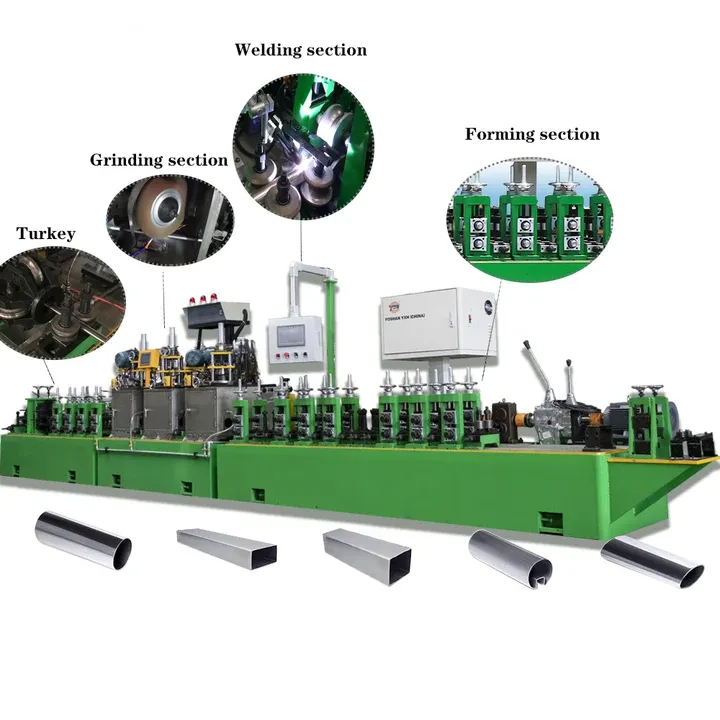
3. Forming Section
- ➤ Manufacturing Process: The leveled strip passes through a series of forming rollers, which progressively shape the flat strip into an open-seam tube. This includes breakdown, fin pass, and squeeze roller stands. Precision CNC machining of rollers ensures consistent profile.
4. Welding Section
- ➤ Technology: High-Frequency Induction (HFI) Welding or Electric Resistance Welding (ERW). HFI provides rapid heating and forging of the seam edges, ensuring a strong, consistent weld. The erw tube mill process is highly efficient for various tube diameters.
- ➤ Weld Scarfing: Excess weld material (flash) is removed from both inside and outside the tube immediately after welding, ensuring a smooth surface finish.
5. Cooling and Sizing
- ➤ Process: The newly welded tube passes through a cooling section, typically using water, to reduce its temperature. Subsequently, sizing rolls precisely adjust the tube to its final specified diameter and shape (round, square, rectangular, etc.), while also correcting any ovality. This stage is crucial for producing a consistent pipe mill machine product.
6. Straightening and Cutting
- ➤ Process: A multi-roll straightener ensures the tube is perfectly straight. Then, a flying saw or cold saw cuts the continuous tube into pre-determined lengths without stopping the production line. For specific applications, a square tube cutting machine might be integrated for specialized profiles.
7. Testing and Finishing
- ➤ Testing Standards: Non-Destructive Testing (NDT) methods like eddy current or ultrasonic testing are employed to detect any surface or internal flaws in the weld seam. Hydrostatic testing may also be performed to verify pressure integrity, adhering to standards like ASTM E213, ISO 9712, and ANSI B31.3.
- ➤ Finishing: Tubes may undergo further processes such as end-facing, deburring, internal cleaning, oiling, or galvanizing, depending on the end application.
Advantages in Typical Application Scenarios:
- ➤ Energy Saving: Modern HFI welding reduces energy consumption by up to 20% compared to older ERW methods due to localized heating and highly efficient power supplies.
- ➤ Corrosion Resistance: For stainless steel tubes, precise welding and scarifying minimize heat-affected zones, preserving the material's inherent corrosion resistance for applications in petrochemical and chemical processing.
- ➤ Service Life: Tubes manufactured on our lines consistently meet or exceed projected service lives of 30-50 years in target industries such as water supply & drainage, and general construction due to superior material quality and weld integrity.
Target Industries: Petrochemical, Metallurgy, Construction, Automotive, Water Supply & Drainage, HVAC, Furniture, Agriculture.
Technical Specifications & Capabilities
Our tube mill lines are engineered for robust performance and high precision, capable of producing a wide range of tube types to meet diverse industry requirements. Below is a table outlining typical specifications for our standard tube mill models, showcasing the versatility and capability of our equipment.
Tube Mill Line – Typical Product Specifications
| Parameter | Light Gauge Mill (e.g., YW-L60) | Medium Gauge Mill (e.g., YW-M120) | Heavy Gauge Mill (e.g., YW-H273) |
|---|---|---|---|
| Tube Diameter Range (Round) | Ø10 mm – Ø60 mm | Ø20 mm – Ø120 mm | Ø76 mm – Ø273 mm |
| Wall Thickness Range | 0.4 mm – 2.5 mm | 0.8 mm – 5.0 mm | 2.0 mm – 12.0 mm |
| Max. Line Speed | 120 m/min | 90 m/min | 45 m/min |
| Forming Rollers Material | Cr12Mov, SKD11 | Cr12Mov, SKD11 | Cr12Mov, D2 |
| Welding Method | HFI / ERW | HFI / ERW | HFI / ERW |
| Main Motor Power | 37 kW – 55 kW | 75 kW – 110 kW | 185 kW – 280 kW |
| Control System | PLC with HMI | PLC with HMI | Advanced PLC with HMI |
| Compliance | CE, ISO 9001 | CE, ISO 9001 | CE, ISO 9001, API |
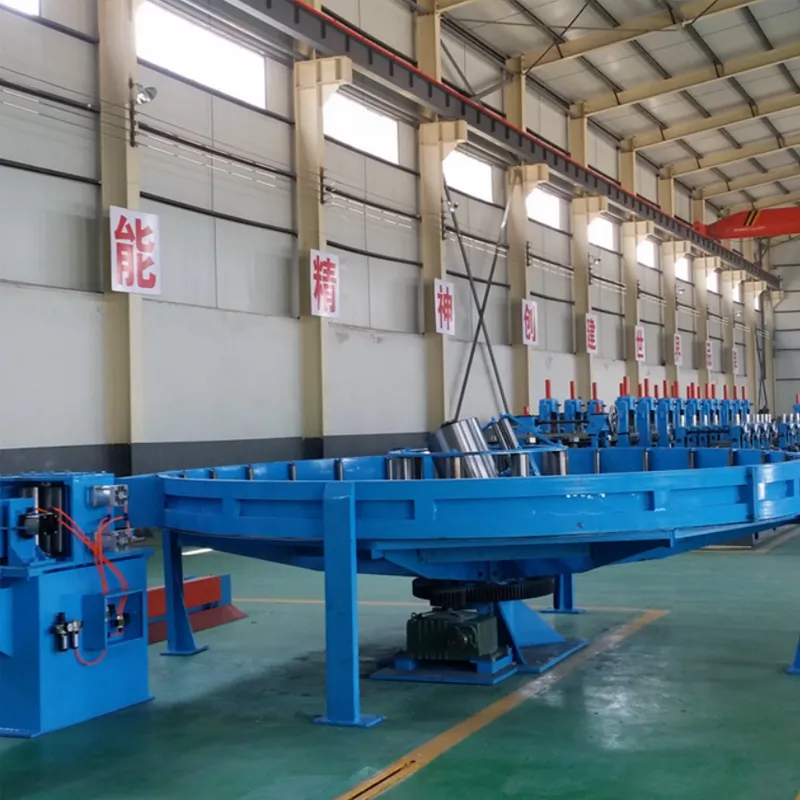
These specifications underscore our commitment to delivering robust and high-performing equipment. The choice of Cr12Mov or SKD11 for forming rollers highlights the use of durable, wear-resistant materials for critical components, ensuring extended operational life and consistent tube quality, a hallmark of our tube milling machine excellence.
Application Scenarios and Industry Use Cases
Our tube mill lines produce a diverse range of tubular products essential across numerous industries, demonstrating versatility and reliability in demanding applications.
Automotive Industry
- ➤ Application: Exhaust systems, chassis components, seat frames, roll cages.
- ➤ Advantage: High-precision sizing ensures perfect fit and weldability for automated assembly lines. Our erw tube mill lines deliver tubes with superior strength-to-weight ratios, crucial for fuel efficiency and safety.
Construction and Infrastructure
- ➤ Application: Structural steel tubing, scaffolding, handrails, architectural elements.
- ➤ Advantage: Robust welding and consistent mechanical properties meet rigorous building codes. The capability to produce large diameter pipes and various square/rectangular profiles using a dedicated square tube cutting machine supports diverse structural designs.
Oil & Gas and Petrochemical
- ➤ Application: High-pressure pipelines, heat exchanger tubes, process piping.
- ➤ Advantage: Our pipe mill machine ensures superior weld integrity and material traceability compliant with API and ASTM standards, vital for safety and operational longevity in corrosive environments.
HVAC and Appliance Manufacturing
- ➤ Application: Condenser coils, evaporator tubing, refrigeration lines.
- ➤ Advantage: Production of thin-walled, small-diameter tubes with excellent surface finish and leak-proof welds, crucial for energy efficiency and system performance.
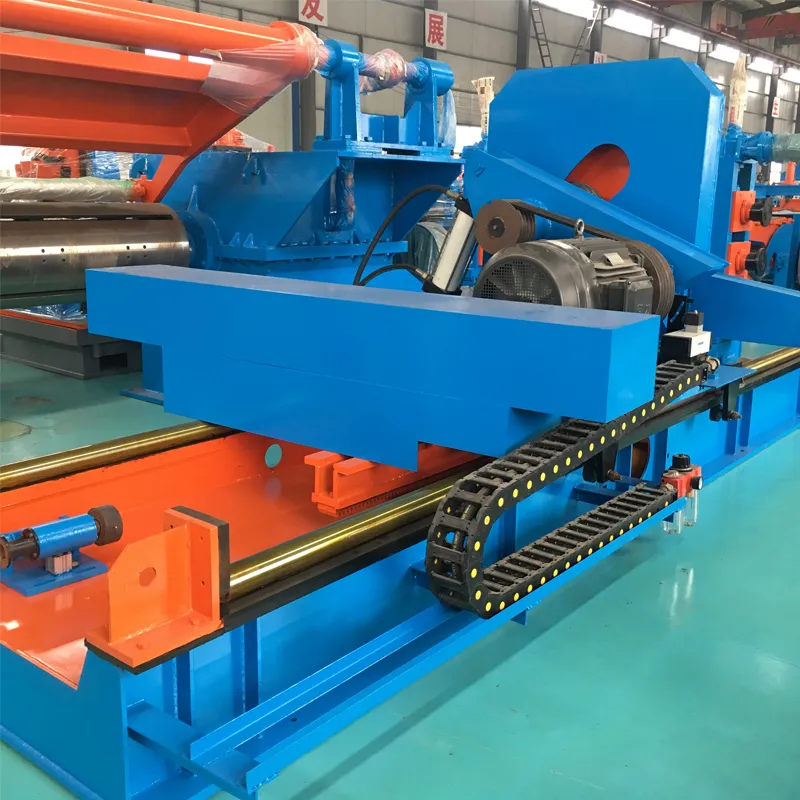
These examples highlight the versatility of our tube milling machine technology in serving critical industrial applications, where reliability, precision, and adherence to specific standards are paramount. Our systems are designed to deliver consistent performance across this spectrum of demands.
Technical Advantages and Innovation
Our tube mill systems are at the forefront of manufacturing innovation, incorporating several technical advantages that translate into superior product quality, enhanced efficiency, and reduced operational costs for our clients.
Advanced High-Frequency Induction (HFI) Welding
- ➤ Benefit: HFI welding ensures a robust, clean weld seam with minimal heat-affected zone (HAZ). This preserves the metallurgical properties of the parent material, leading to superior mechanical strength and ductility. It is significantly faster and more energy-efficient than traditional welding methods, reducing energy consumption by up to 15% in comparative operational studies.
- ➤ Expertise: Our engineers optimize induction coil design and frequency modulation to achieve precise heat distribution, minimizing internal flash and porosity.
Precision Forming and Sizing Technology
- ➤ Benefit: Utilizing advanced roll tooling designs and servo-controlled sizing stands, our mills achieve exceptional dimensional accuracy (tolerance within ±0.05mm for diameter and wall thickness). This reduces material waste and allows for tighter fit-up in subsequent manufacturing processes.
- ➤ Expertise: We employ finite element analysis (FEA) in roll design to predict and optimize strip deformation, ensuring uniform stress distribution and preventing material thinning or wrinkling.
Integrated Automation and Smart Control Systems
- ➤ Benefit: Full PLC/HMI integration enables real-time monitoring, fault diagnostics, and rapid parameter adjustments, significantly reducing human error and enhancing operational safety. This system can connect to factory-wide ERP systems for seamless production management.
- ➤ Expertise: Our control software is developed to support Industry 4.0 principles, offering data logging, remote diagnostics, and predictive maintenance capabilities, ensuring maximal uptime for your tube milling machine.
Enhanced Material Versatility
- ➤ Benefit: Our mills are designed to handle a wide array of materials, from standard carbon steel and galvanized steel to high-strength stainless steels (e.g., 300 and 400 series), titanium alloys, and aluminum alloys. This flexibility opens up new markets and applications for our clients.
- ➤ Expertise: Specialized forming roll materials and welding power supplies are matched to the specific metallurgical properties of each alloy, ensuring optimal processing and minimal material degradation.
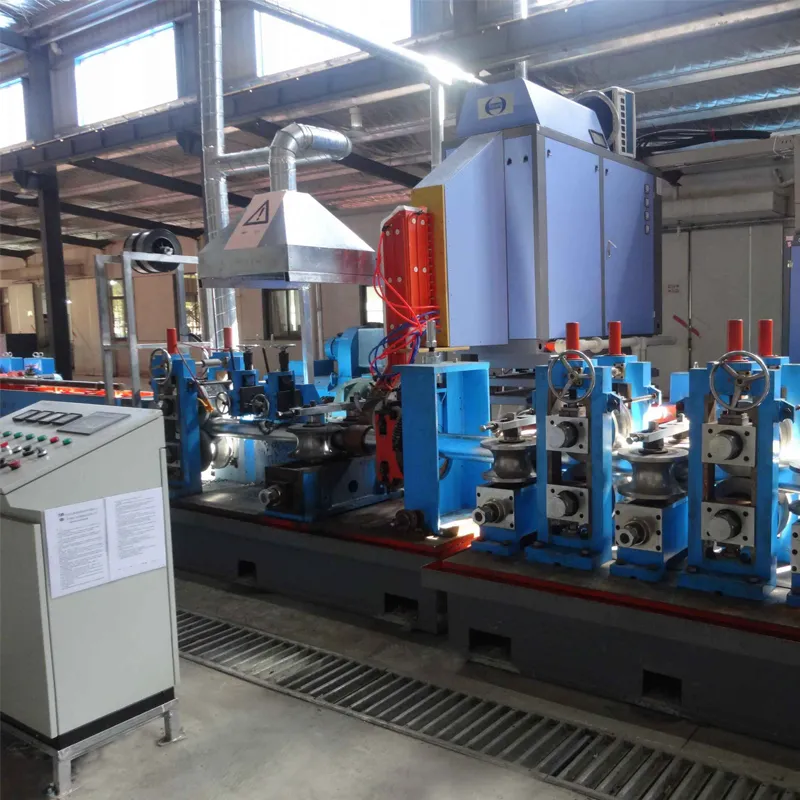
These advantages are critical for maintaining competitiveness in a rapidly evolving market, ensuring that our erw tube mill solutions deliver both performance and long-term value.
Vendor Comparison: Choosing the Right Tube Mill Partner
Selecting the right vendor for a tube mill investment is a strategic decision that impacts long-term operational efficiency, product quality, and return on investment. Below is a comparative overview of key factors to consider, contrasting our offerings against typical market alternatives.
Comparative Analysis of Tube Mill Vendors
| Feature/Criteria | Yowin Machine (Our Offering) | Typical Market Alternative A | Typical Market Alternative B |
|---|---|---|---|
| Automation Level | High (Full PLC/HMI, IoT readiness, auto-diagnostics) | Medium (Basic PLC, manual adjustments) | Low to Medium (Semi-automatic, reliance on operator skill) |
| Welding Technology | Advanced HFI/ERW (Energy-efficient, minimal HAZ) | Standard ERW (Good, but less efficient) | Conventional ERW (Lower speed, wider HAZ) |
| Material Versatility | Wide (Carbon, Stainless, Galvanized, some alloys) | Moderate (Mainly Carbon and Galvanized steel) | Limited (Basic carbon steel) |
| After-Sales Support | Comprehensive (24/7, remote diagnosis, onsite, spare parts) | Standard (Business hours, limited remote, delayed parts) | Basic (Local agent, longer response times) |
| Customization Options | Extensive (Tailored to specific production needs) | Limited (Standard models with minor modifications) | Minimal (Off-the-shelf) |
| Certifications/Compliance | ISO 9001, CE, (API for heavy-duty mills) | ISO 9001 | Basic local compliance |
This comparison highlights our commitment to providing cutting-edge solutions, superior support, and a higher level of customization, distinguishing our offerings in the competitive pipe mill machine market. Our 20+ years of experience in the industry allow us to understand and address the intricate needs of modern tube production.
Customized Solutions and Engineering Expertise
Understanding that off-the-shelf solutions rarely fully align with the unique demands of every client, we specialize in delivering highly customized tube mill lines. Our engineering team leverages deep industry expertise and advanced design tools to tailor every aspect of the mill to precise operational and production requirements.
Tailored Design and Configuration
- ➤ Production Capacity: We design mills to match desired output rates, whether for high-volume standard tube production or lower-volume specialized tubes. This includes optimizing line speed, number of forming passes, and welding power.
- ➤ Material Specifics: For challenging materials like high-strength steel, specific stainless steel grades, or non-ferrous alloys, we adjust roll materials, forming sequences, and welding parameters to prevent material degradation and ensure optimal weld quality.
- ➤ Tube Profile and Dimensions: Beyond standard round, square, and rectangular, we can engineer solutions for custom profiles, varying wall thicknesses, and exceptionally wide or narrow strip widths. For instance, our square tube cutting machine integration can be precisely configured for multi-strand cutting of specific geometric profiles.
Integration of Ancillary Equipment
- ➤ Upstream & Downstream Integration: Our solutions extend beyond the core tube milling machine. We integrate coil handling systems, advanced scrap removal, automated packaging, online non-destructive testing (NDT), hydrostatic testers, and other finishing equipment to create a complete, seamless production line.
- ➤ Control System Unification: All integrated components are synchronized through a centralized PLC and HMI, providing a single point of control and monitoring, enhancing operational efficiency and data collection.
Value-Added Engineering Services
- ➤ Layout Optimization: We provide comprehensive factory layout planning, ensuring optimal material flow, accessibility for maintenance, and maximum utilization of space.
- ➤ Simulation and Prototyping: Utilizing advanced CAD/CAM and simulation software, we can model proposed designs and predict performance, allowing for virtual testing and optimization before physical construction begins. This reduces risks and accelerates deployment.
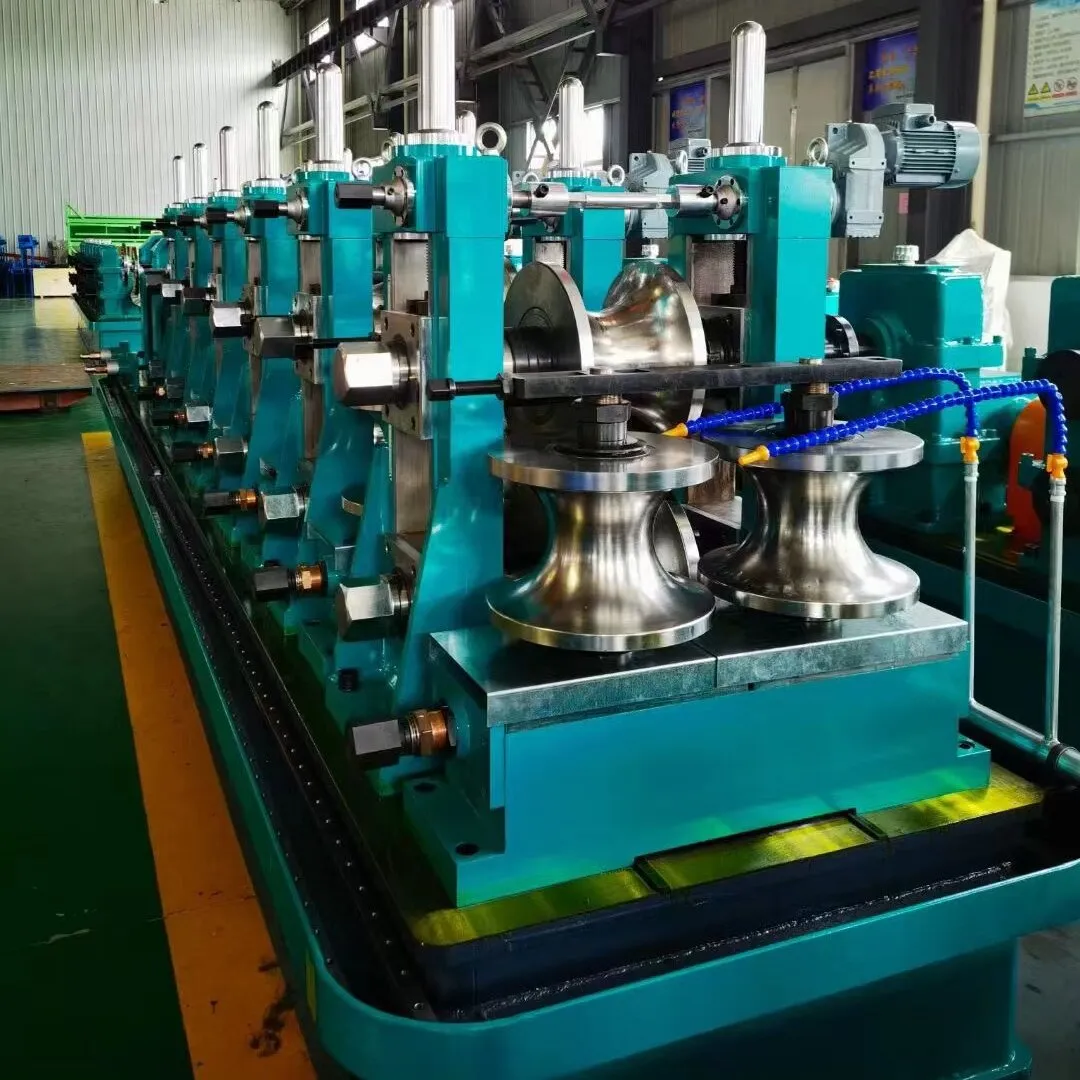
Our collaborative approach ensures that each customized solution is a perfect fit, delivering long-term value and operational excellence, backed by decades of experience in the pipe mill machine sector.
Application Case Studies & Client Successes
Our commitment to delivering high-performance tube mill solutions is reflected in the tangible successes of our global clientele. Here are a few examples showcasing the impact of our technology and service.
Case Study 1: High-Volume Automotive Component Manufacturing
- ➤ Client: A leading Tier-1 automotive supplier in Germany.
- ➤ Challenge: The client required a new erw tube mill line capable of producing high-strength, thin-walled tubing for exhaust systems and structural components at extremely high speeds, with minimal tolerance deviations.
- ➤ Solution: We supplied a customized YW-M120 series HFI erw tube mill line, integrated with advanced flying shear technology and online eddy current testing. The system included specialized roll tooling designed for stainless steel and high-carbon steel, ensuring superior weld quality and dimensional precision.
- ➤ Result: The client reported a 25% increase in production throughput, a 15% reduction in material scrap due to tighter tolerances, and an overall improvement in product quality, meeting stringent OEM requirements.
Customer Feedback: "Yowin Machine delivered a robust and highly efficient tube mill that exceeded our expectations. The precision and speed have significantly boosted our competitive edge." – Plant Manager, Automotive Supplier.
Case Study 2: Heavy-Duty Structural Tubing for Infrastructure
- ➤ Client: A major steel fabricator in the Middle East specializing in large-scale construction projects.
- ➤ Challenge: The client needed a heavy-gauge pipe mill machine capable of producing large diameter square and rectangular tubes from high-tensile steel, with emphasis on structural integrity and straightness for bridge and building applications.
- ➤ Solution: We engineered a YW-H273 series heavy-duty mill with enhanced forming sections, a powerful HFI welder, and an integrated precision square tube cutting machine. The system was calibrated to handle thicker materials up to 12mm and included an advanced straightening section.
- ➤ Result: The client successfully expanded their product offerings to include certified structural sections, securing contracts for major infrastructure projects. The structural tubes consistently passed rigorous load-bearing and fatigue tests, exceeding client and industry standards.
Customer Feedback: "The reliability and sheer power of this pipe mill machine are remarkable. It's been a game-changer for our structural fabrication division, enabling us to take on more complex projects." – CEO, Steel Fabrications Group.
These cases underscore our ability to not just supply equipment, but to partner with clients in achieving their strategic manufacturing goals through tailored, high-performance tube milling machine solutions.
Frequently Asked Questions (FAQ)
Q1: What is the typical lead time for a new tube mill line?
A1: Our standard lead time for a new tube mill line ranges from 90 to 180 days, depending on the complexity of the customization and specific model. This includes design, manufacturing, assembly, and initial testing. For highly specialized configurations, lead times may extend, but we provide transparent timelines upfront.
Q2: What kind of warranty do you offer on your tube mills?
A2: We provide a comprehensive 12-month warranty from the date of commissioning or 18 months from shipment, whichever comes first. This covers manufacturing defects and major component failures under normal operating conditions. Extended warranty options are available upon request for our erw tube mill lines.
Q3: What post-sales support and training are provided?
A3: Our commitment extends beyond delivery. We offer extensive post-sales support including onsite installation, commissioning, and comprehensive operator training. Our global technical support team is available 24/7 for remote diagnostics and troubleshooting. We also maintain a robust spare parts inventory for rapid fulfillment to minimize downtime of your pipe mill machine.
Q4: Can your tube mills process various types of materials?
A4: Yes, our tube mill lines are designed for high versatility. They can process a wide range of materials including carbon steel, galvanized steel, stainless steel (300 and 400 series), and select high-strength low-alloy (HSLA) steels. We tailor the roll tooling and welding parameters to optimize performance for specific materials.
Q5: What are the main benefits of choosing an HFI welding tube mill?
A5: HFI welding offers several key advantages including faster production speeds, superior weld quality with minimal heat-affected zones, reduced energy consumption, and cleaner weld seams. This results in higher strength, better surface finish, and extended service life for the finished tubes, making it a preferred choice for advanced tube milling machine applications.
Lead Time, Warranty, and Customer Support Commitments
At Yowin Machine, we understand that purchasing a tube mill is a significant investment requiring clear commitments regarding delivery, reliability, and ongoing support. Our policies are designed to instill confidence and ensure a seamless experience for our B2B partners.
Lead Time and Fulfillment
- ➤ Manufacturing Cycle: Our streamlined production process, combined with robust supply chain management, allows us to typically deliver standard tube milling machine models within 90-120 days. Custom configurations may require 150-180 days.
- ➤ Project Management: Each order is assigned a dedicated project manager who provides regular updates from design confirmation through to shipment and commissioning, ensuring full transparency.
- ➤ Global Logistics: We manage all aspects of shipping and customs clearance, offering various incoterms (FOB, CIF, DDP) to best suit our clients' logistical preferences.
Warranty Commitments
- ➤ Standard Warranty: A 12-month full parts and labor warranty is provided, effective from the date of final commissioning or 18 months from shipment, protecting against manufacturing defects and material failures.
- ➤ Extended Warranty Options: Clients can opt for extended warranty packages for critical components or the entire pipe mill machine line, offering additional peace of mind and protection for long-term operations.
- ➤ Quality Assurance: Our adherence to ISO 9001 quality management systems and CE certification ensures that every component and assembly meets the highest international standards before leaving our facility.
Dedicated Customer Support
- ➤ Installation and Training: Our experienced engineers provide onsite installation, meticulous commissioning, and comprehensive training programs for client operators and maintenance teams, ensuring proficient operation from day one.
- ➤ Technical Assistance: Our global support network offers 24/7 technical assistance via phone, email, and secure remote access for diagnostic and troubleshooting services. We aim for rapid resolution to minimize any operational interruptions.
- ➤ Spare Parts and Consumables: We maintain a comprehensive inventory of genuine spare parts and consumables, guaranteeing availability and rapid dispatch to prevent prolonged downtime. Our strong partnerships with key component suppliers ensure authenticity and quality.
Our commitment to reliability, transparency, and responsive service ensures that your investment in a Yowin Machine tube mill provides enduring value and exceptional performance throughout its operational life.
References
- American Petroleum Institute. (2018). API Specification 5L: Specification for Line Pipe (46th ed.).
- ASTM International. (2020). ASTM A513 / A513M: Standard Specification for Electric-Resistance-Welded Carbon and Alloy Steel Mechanical Tubing.
- European Committee for Standardization. (2018). EN ISO 9001: Quality management systems – Requirements.
- Wang, Z., Sun, G., & Ma, H. (2019). Research on high-frequency welding technology of steel pipes. Journal of Manufacturing Processes, 45, 112-118.
- International Organization for Standardization. (2020). ISO 9712: Non-destructive testing – Qualification and certification of NDT personnel.